The Real Danger of the Fake News Debate

image credit: The Opte Project

What Google, Facebook, and Media Companies Must Do if They Want the Truth to Prevail

If you keep track of Twitter trends at all, you’ll likely have seen that a trending topic is the fact that Google and Facebook are taking actions to sanction what they call “fake news” outlets. On the face of it, this is good news — no matter which party or politicians you favor. The simple motive is easy to agree with: take away the source of funding for organizations that peddle false or misleading information. When thought of in that way, it’s a pretty easy sell.

But unfortunately, it just isn’t that simple. Trump and GOP supporters have reacted on Twitter to show why:

https://twitter.com/Cernovich/status/798418791575277569

https://twitter.com/deplorablejayo/status/798528947508117504https://twitter.com/allentom/status/798528846387494912https://twitter.com/Timcast/status/798528001952477184

You get the picture. While there is certainly an element of knee-jerk reactions at work here, I can appreciate the underlying worry. Information is the most valuable commodity in the developed world. It is the basis for our decisions — personal, professional, and political. As the complexity of the world increases, what information we have and how we use it becomes more and more important. The question of who controls the channels of that information, and how easy it is to access it is an important one.

Deciding on the Truth

But more than that, there is a very important two-part question:

  1. How it gets determined that a piece of news — or its publisher — is peddling falsehoods or misleading.
  2. Who makes that determination.

I don’t think that either of those questions are easy to answer. Furthermore, we must be careful who answers those questions and how. The tweets above make it clear that there is already a crowd of people that are skiddish about the established news outlets — for various reasons.

So if this push to filter and purify the real news from the fake news comes primarily through and primarily benefits the established news outlets, it does two dangerous things. First, it confirms the suspicions of those who are already skeptical of established new sites. Secondly, it works against the goal of establishing trusted news sources, because those who had distrust of them will now be left out of the conversation.

I could see that easily leading to the proliferation of all sorts of alternative news outlets with little to no semblance of fact-checking or journalistic integrity. That leaves the door wide open for impressionable audiences to swear allegiance to them as sources of information, thus literally changing the fabric of public decision-making for millions of people.

Worry About the Right People

I myself am not worried that Google and Facebook are up to anything shady, but I’m not the type of person that their news-filtering is aimed at anyway. The very people that this news-filtering exercise is supposed to help are the very people that are most likely to be harmed if this exercise is not done right.

Google and Facebook — along with the established news outlets — need to be very careful that they don’t end up alienating the very people who they are worried about being misinformed by fake news sources. Failing to do so has the potential to backfire.

I’m not sure exactly how this gets done — I’m no PR expert. But what I am sure of is that it’s very important that it’s done right, and I’m also pretty sure it involves an honest, transparent dialogue with media and establishment skeptics. That may not be very appealing to these companies, but I don’t see how they can achieve their objective without doing it.

Did you like this piece? Consider subscribing to Woolgathering — my weekly newsletter. I promise not to email you more than once per week.

Please, Please, Please Don’t Quit Your Day Job

piece by Nathan Sawaya, photo credit: Design Milk

It Won’t Kill Your Passion Project

I’ve been working at a regular 9 to 5 type job for the past 6 years and change. It’s not a glamorous job. It’s not a glamorous industry. In fact, it’s a very old business, where being considered a startup is a severe disadvantage.

I also have this side gig — which I’ve been working on for the past year or so, which is writing online. I write here on Medium, I have a weekly newsletter (sign up for it, won’t you?), and I also write copy for clients. That last piece is the only thing that pays. The other two are basically ways to create a funnel for that paying work, and to just write out the myriad thoughts that pop into my head — to flesh them out, lest they rattle around and distract me from actually living my life.

The Day Job

The work I do at my day job is not at all related to what you see me do online, and what I do for my clients. The only things I write at that job are emails, reports on projects, or powerpoint presentations of business conditions to current customers. It’s not my dream job; it doesn’t give me the thrill of expressing my true passion and creativity, and no one is asking me to give talks or be on podcasts.

But this regular job — the kind that many millennials who overuse the word “passion” would scoff at — does something for me that I would never give up. It provides me a reliable foundation that allows me to do what you see me doing here. It allows me to do that and to not compromise this in a mad-dash effort to market and monetize it. Also — and this is not be overlooked — it allows me a buffet of experiences in business to help me write better, interact with clients better, and conduct business better.

The “All In” Argument

Everyone reading this can surely think of a very recent article where the writer gives the advice that you should quit your day job to go “all in” on your passion — which has been your side hustle. The argument usually goes something like this: once you go all in on your passion project, and abandon your safety net of a day job, you’ll be forced to make it work — forced to find a way to make it profitable. When you risk it all, you stand to succeed in a bigger way, because you have to.

I get that argument. Part of it sounds compelling. Having a safe job to fall back on can be a device that keeps you from fully committing to your side project, something that saps your energy and time that could be going to the thing you love. It could be what keeps you from really doing what your heart really wants to do.

But that scenario is not true for everyone. In fact, I think it’s only true for a few people. What’s more, I think that if having a safety net keeps you from making your passion project work, maybe you’re not as passionate about it as you thought.

Don’t Compromise

Having a day job, for me, provides something invaluable for my passion-pursuit of writing online: it allows me to never compromise my work just to get money. I’ve thus far had 2 paying gigs writing copy. Both have paid well, been for clients that recognized the value I bring, and have matched my style. Because of that, both gigs have been immensely enjoyable, even when difficult. I haven’t had to take a questionable gig for a low fee, with a client who didn’t value my work. That’s the trifecta right there.

But here’s the thing: I wouldn’t be able to say that if I had tossed aside my day job to try to make money as a writer. Because I’m not relying on my writing as the sole means to support my family, I don’t have to compromise it.

My pace is slower, yes — it may take years before I have enough work writing to amass a decent income. But so what? Have we forgotten that good things take time? Have we forgotten that becoming really good at a craft (like writing) takes a long time, and that getting recognized as good at that craft takes even longer? Have we so deluded ourselves about growth-hacking and disrupting that we think we can brute force excellence? I haven’t.

I want to write, and I want that writing to be valued enough that I can live off of it. That can only happen when people realize the value that my writing has, and are willing to pay for it. Something like that takes time — probably a lot of time. No balls-out marketing effort can guarantee that it will happen — not while keeping intact the integrity and values of my practice.

If you find yourself disagreeing with me, you have to ask yourself: do I really have a passion for this thing I’m doing, or is that passion outweighed by a passion for money and notoriety? If you refuse to be patient in your passion project — if you refuse to work on the thing itself, and instead work on finding a way to monetize it, maybe you’re not as passionate about that thing as you thought. That’s okay, I understand the pull of money and notoriety. It’s a strong pull, and we all feel it.

At the End of the Day

My argument may give you pause, it may not. You might be young, single, ambitious, and ready to take this world by the horns. You may read my words as the words of a guy who gave up on his dream and now just does what he can to keep a day job from crushing his soul. But surely, that’s a little reductive, no? Surely an opinion like that has not been tempered by the thoughtfulness of time spent caring about what you do, and not how it makes you cash.

So, in terms of a piece of bite-sized advice that’s easily shared and tweeted, I’ll say this: your day job may be the very thing that helps you make money doing what you’re really passionate about, rather than contorting that thing into something lucrative but lackluster. Passion isn’t something that dies out because there’s no money to fuel it. That’s not the way passion works.

So keep your day job. It may be the very thing that allows you to eventually do what you love.

Did you like this piece? Consider subscribing to Woolgathering, my weekly newsletter. I think you’ll like it.

Hacker Noon is how hackers start their afternoons. We’re a part of the @AMI family. We are now accepting submissions and happy to discuss advertising & sponsorship opportunities.

If you enjoyed this story, we recommend reading our latest tech stories and trending tech stories. Until next time, don’t take the realities of the world for granted!

When You Think About It

credit: Thomas Leuthard

A Poem

When we leave this all

remember why we were there,

for all

of those who care

it might be a blessing,

though vainly disguised.

But when we get out, we may find something

to gain

something to lose,

either way it’s the same.

Because when you think about it,

there is much more for the white

and less for the blues

as if anything said through clenched teeth

could ever be good news.

So not for monotony,

but I think I may have had a damn good time.

And the dichotomy is sharply seen

at this point of the line,

where the credits are rolling over.

So for those traveling far

remember the faces that you are

and crack a smile

lest someone crack it for you.

Do please let the feelings go

and make sure they never know

where you hid your gold.

Until then

time and again

keep what is fleeting

because permanent things hurt

the most.

a toast

Like You

A Short Apropos Poem

The only way that I can keep going on

is to remember that like you, I love.

Like you, I thirst

I hunger

I yearn

I hurt

I do all of these things — nay — they happen to me

as they happen to you.

My heart treads a different path, but beats just as hard

as yours.

The blood is as dark and red

as yours.

My convictions push me as hard

as yours.

We are so alike, and yet we are so in denial

of that fact.

I keep forgetting, but I’m trying to remember

to channel the faith in my cause

into faith in us, that you and I

can be an us again.

That we are like me

and like you.

Like you, I forget this from time to time.

But that is okay, because you do, too.

We can forgive — people like me,

like you.

After the Election: Let’s Work on This One Thing

About two months before the election that took place yesterday, I was having a discussion about the candidates with a co-worker. He is about 15 years my senior, and grew up in a predominantly black neighborhood in a notably impoverished city, but he is white. He is a Trump supporter. Despite our wildly different stances on the candidates, we had a really fruitful discussion. We walked away from it understanding that we disagreed on our means, but that our ends were largely the same.

To me, this conversation was illustrative of how we ought to approach conversations in general. We will likely disagree with many people. These disagreements may be deeply held. But we need to be able to voice our disagreement in a way that respects others.

Why, you may ask, should we do this? Why not just hold our opinions and rigidly oppose those who hold opposing ones? The answer is simple: that’s now how progress happens.

In order to make progress, we need some level of buy-in from those who previously didn’t buy in. The only way to get that effectively is to keep an open conversation where people feel safe to change their views. That means that when you disagree with someone, you need to stay open, and so do they. Doing that will leave open a compromise — the prospect of incremental, but lasting and sustainable progress.

In order to do that, we must do three things.

Give others the benefit of the doubt.

59 million people voted for “the other guy” yesterday. Many of them are people I work with, people in my neighborhood, friendly acquaintances. This is very likely true for every person reading this. It does you no good to assume that all of those people are either stupid, evil, or both. By and large, they want the same things as you, they just think that there’s a different way to get there than you do.

Remember this every time you think about those with whom you disagree. At a higher level, you and them have the same goals. You want to be happy, healthy, secure, and free. So do they. You want an end to violence, conflict, and oppression. So do they. Start with this in mind, and keep it in mind as you converse.

Be willing to find evidence to the contrary.

If you seek to understand those who disagree with you simply for the purpose of proving them wrong, you will likely end up overlooking valuable information due to a confirmation bias. This is true because you’re already looking for information to prove your point, not what information proves their point. Really think about the ways in which your interlocutors could be right. Not only will it make your tone a lot more inviting for conversation, you may actually learn something.

Be Willing to Leave Things Unresolved

The worst thing you can do in a disagreement is act as if you need to come to some resolution right then and there. Rarely is this the case. When you act that way, you deny yourself a very powerful benefit: the benefits of time and further experience. The passage of time allows your emotions to cool, allows you to become open to new information, and allows you to think about and absorb what you did discuss. Unless the decision is literally life or death, ensure that you don’t place any constraints on your time that aren’t really there. It can be the difference between progressing and regressing.

It’s probably no secret that I wanted Hillary Clinton to win the election. But I woke up today intending to find a way to make the best of a Donald Trump presidency — not by giving in, but by staying open for areas of agreement, no matter how minuscule. We stand or fall on our ability to talk with — not at — each other.

Let us stand together in that way, for if nothing else, we both care immensely about this great society.

Agree with me? Disagree? No matter, consider subscribing to Woolgathering, my weekly newsletter.

What a Pizza-Eating Champion Taught Me About Goals

On Pizza, Projects, and Persistence

Not too long ago, I was employed as a salesperson by a chain sports nutrition store. Though it was a textbook retail job, I really enjoyed it. I have always had an interest in supplements and nutrition, so helping people find what would help them reach their health and fitness goals was somewhat fulfilling to me.

I also got to meet a lot of interesting characters.

One such character was a man who came into the store in the huge mall where I worked. He was wearing a shirt that read “pizza eating champion” — accompanied by the name of the sponsors and the chain pizza place that supplied the pizza. I knew that place. I loved their pizza. The slices were gigantic.

I had to talk this guy. I had a lot of questions. So when he approached the counter to buy his stuff, I broached the inevitable topic.

The pizza slice in question, see the anatomical reference points.

“Did you really win that contest?” I asked, with an almost interrogator tone. The man was not very large. He was thin, somewhat short, and not at all what I’d imagine a pizza-eating champion to look like.

The man smiled. “Yeah, I won last year. I figure I can wear the shirt until the next one.”

“Wow, that’s not a bad title to hold — even for a year.” I said genuinely impressed. “How many slices of pizza did you eat?”

He answered “One.”

“What?!” I said incredulously. “There’s no way you won a pizza-eating contest by eating one slice of pizza!”

“Sure there is. I ate one slice of pizza. I just did that 9 more times, and I won.”

I grinned. “Ah, I knew there was a catch.”

The man gave an unexpectedly serious look and said, “There’s no catch. That’s the way you have to do it. I couldn’t go out and eat 9 slices of pizza — no one can. But what I could do is eat one slice of pizza — I’d done that a bunch of times. So I just kept doing that, over and over. That made it easy to do. All I had to think about was the slice on my plate. That was easy.”

Everything Big is Actually Small

That conversation has stuck with me. The way this pie-eating champ laid it out was so simple — stupidly simple. For any project, it’s actually counterproductive to think in terms of doing the project. You can’t do a project. What you can do is work the simple tasks that make the project. Pizzas and projects are very similar, as it turns out. The big thing is really just a bunch of small things.

I know this. I’ve known it for a while, but I fail time and again to think that way. I always think of things on a large scale — in terms of having to eat all 9 slices, rather than just eating one. I think we all do.

But like the man said, I can’t do a large project — I can only do the small tasks involved. To think about more than that is a waste of energy. Just this slice in front of me, that’s all I need to think about right now. There will be time later to think about how much I’ve already eaten, and how much I still need to eat.

You probably have at least one huge, daunting goal or project. When you think of getting it done, are you thinking about the whole pizza, or the next slice you can eat? Get clear with yourself on that. It could be the difference between making good progress and defeating yourself.

No one eats a whole pizza. No one does a whole project. They take it one slice, or one task, at a time. We already do it. We just have to learn to think that way.

Anyone else hungry?

Guard Your Inbox Better

On the Sanctity of Email, and How It Affects Your Productivity

A Tweet is like saying something loudly at a party with people you only vaguely know.

A Facebook post is like handing out a pamphlet to everyone in a medium-sized suburb.

A LinkedIn post is like handing out an oversized business card at a huge conference or trade show.

An email, however, is like knocking on someone’s door, and that’s where all this analogizing gets interesting.

While you can avoid nearly everything on your Facebook and Twitter feeds, and you can just not log on to LinkedIn, or skim for leads without addressing your newsfeed or timeline, your email inbox is different.

Email is not like paper mail because email is part of so many people’s workflows. When you go outside to get your mail, you’re not also working. You’re going outside to get your mail, and that’s about it. It’s really the only thing you can be doing at that time. Furthermore, you don’t put stuff back in your mailbox if you plan on doing something with it at some point. But we do that with our inboxes all of the time.

To me, the email inbox is that rare thing that is kind of like something in the pre-internet world, but more a thing unto its own. It is a new channel of communication, and a new component of nearly everyone’s workflow. How much email you have in your inbox, how much of it is read, unread, flagged, and tagged, all have an effect on how well you perceive your work to be going.

So I am careful with what I choose to receive via email. Out of the 50 or so popups that I see on peoples’ websites — telling me that I should click to sign up to receive a free e-book (or 2, or 3) and newsletter — I click maybe one. Maybe. I ask myself one simple question before I proceed:

Do I see myself adding this person’s email to my workflow in a positive way?

If the answer is not an immediate “yes”, I do not click. It’s that simple. I think that this is the way that we should all approach guarding our inbox. Your inbox should be a place where no less than 90% of the stuff in it each morning is stuff that adds positively to your workflow. Otherwise, it’s actually sapping quite a bit of cognitive energy, and likely creating roadblocks to your personal and professional productivity. By the time you’ve expended the mental energy to sort through, delete, prioritize, and respond to emails, you’re that much closer to decision fatigue.

When you make a decision — or avoid a temptation — you’re using up the supply of mental energy you have for a day, in the same way that you can only lift a weight so many times before your muscles give up on you.

These days, I guard my inbox. I don’t sign up for alerts that don’t latch directly to something in my existing workflow or project list. I don’t sign up to receive ebooks or tips from people whose work I haven’t read or who I’m not sure that they won’t flood me with the same email message in 10 different ways each month (that same email being “buy my stuff!”).

The bottom line: guard your inbox, because it’s not like your Twitter Feed, Facebook Timeline, or LinkedIn message center. Your inbox is your front doorstep, your office door, the window to your workflow. Guard it as such. It will be a boon to your productivity.

Please support Creatomic by clicking that little heart!

Liked what you read? Subscribe to Woolgathering: my once-weekly newsletter. It’s like a pat on the back for your inbox, and I don’t have a free e-book or course to spam you about!

The Illusion of Fiction

credit: Tom Woodward

The best fiction is actually really good non-fiction.

The first book I remember reading all the way through is The Kid Who Only Hit Homers by Matt Christopher. I was 8 or 9, if memory serves. The book is about a Little League baseball player who is having trouble getting hits. He encounters a magical being (one that oddly resembles Babe Ruth), who promises to make him the best player on his team. Shortly thereafter, the kid proceeds to hit home runs each time he swings the bat.

Whether or not this mysterious magical being actually exists or not, and whether he had anything to do with the kid’s athletic transformation, is an underlying mystery of the story. It’s a device that kept my young fingers eagerly turning the pages. It is what hooked me when so many other stories for young people failed to catch my interest. And as I look back on the fiction that I have read, it reminds me of something that I realized early on in college: the divide between fiction and non-fiction is illusory.

Please don’t be offended, fiction writers. After all, some of my best friends are fiction writers! (which means I can say whatever I want. That’s how race-related comments work too, right?)

All I mean here is this:

Good fiction — the kind that captures people and holds onto them for longer than the handful of hours they’re reading — is actually doing the dirty work of non-fiction. It is revealing deep truths about our world, about the human condition, about reality in general. It is solving mysteries and playing with real emotions.

For me, as a 9-year-old reading a book about a kid finding his groove at the plate, there was a comment on human psychology that I picked up — without being totally aware of it. The underlying comment was this: sometimes we believe things that others see as absurd, but those beliefs are powerful. I couldn’t spell it out, because Matt Christopher (the author) didn’t spell it out explicitly in the book. Instead, he used a made-up story to gesture at an important truth.

And that’s the thing about fiction. It can be (and often is) better at telling us true things about our world than non-fiction is. That’s because non-fiction tells us truths about our world — dryly and explicitly. Fiction, on the other hand, shows us truths, poetically and emotively.

Fiction has the vehicle of abstraction that non-fiction really doesn’t. Fiction possesses the ability to abstract away from all of the people, places, and things of our world — all the details that weigh our minds down, and keep them from thinking freely. It abstracts away from all those things and frees us, thus allowing ourselves to take a bird’s eye view of our world, through the lens of a different one.

Now, there is some fiction that simply tells a story, presents a mystery, and entertains. But I would submit that if that’s all it does, it’s largely forgotten soon after publication. The memorable stuff, the great stories, are memorable precisely because they scratched through the surface and tickled our collective consciousness. They constructed a series of falsehoods and managed to discover the truth.

So if I’m so concerned with getting at the underlying truths of the world, why don’t I write fiction? Good question. It has everything to do with me. I’m impatient and I’m just no good at constructing characters and a plot. So I take the easy way out. I write things like these, that pop into my head, and pique my interest.

I’ll leave it to the pros to write the prose.


I write a bunch of stuff like this. If you liked it, consider subscribing to Woolgathering, my weekly newsletter. I think you’ll like it.

Seek First to Understand

credit: Enver Rahmanov

The Foundation of Personal and Professional Success

Not long ago, I caved and read the classic of the personal development genre The 7 Habits of Highly Effective People. I admit, it’s a really good book — it lives up to the hype. You can read the 7 habits for yourself here, but I want to focus on one in particular because it has helped me immensely in both my personal and professional life:

Seek first to understand, then to be understood.

To me, this habit is the most important of the 7, without question.

The essence of this habit is a temperament that favors curiosity, open-mindedness, empathy, and patience — all rolled into one. In order to really seek to understand, you cannot have already judged a person or situation. You need to develop a desire to understand — meaning a desire to see things from others’ point of view, to see their reasons, and feel what they feel.

The great thing about this habit is that it not only makes you a better friend, co-worker, and partner to those around you, it provides tremendous benefits to you as well. Here are but a few that I have found, as I try to employ the strategy of seeking first to understand:

1. You learn better

Being a lifelong learner is important. If you’re reading this, you have probably read a few of the thousand pieces on the internet that talk about just how important it is to be continuously learning. Well, there is little that you can do to more effectively cultivate the mindset of a lifelong learner than to seek to understand.

When you seek to understand, you admit that you don’t currently understand. Which means you admit that you are not in possession of all the relevant information. Which means you’re effectively ready to learn it.Boom! Life Learning!

2. You prevent yourself from saying things you’ll regret

Few things can get you into more trouble than being too quick to talk. You can end up committing to things that you shouldn’t, saying things you don’t even mean, and generally killing your credibility. In many cases, we speak first and speak often because we’re looking for people to understand us.

If we seek to understand others first, we’re more likely to listen before we speak. When we do that, we can avoid saying things that on reflection we shouldn’t have. We also tend to ask more questions, rather than making statements, which keeps us from over-committing and contradicting ourselves.

3. Your emotional intelligence skyrockets

Emotional intelligence is all the rage these days. Everyone from leaders to up-and-comers are being told just how important it is to be able to read people’s emotions (as well as their own) and react to them appropriately. Doing that effectively will require a disposition to desire to understand how others feel. You will have to seek to understand the feelings of others, just as much as you seek to understand your own.

4. Your ability to influence improves dramatically

When you seek to understand others, and begin to act accordingly, two things will likely happen.

First, you’ll gain a rapport with them. They will be more likely to talk to you about various things, and you will be more likely to be privy to information that can be helpful to you. When your’e trying to achieve ambitious goals, build a team, and get buy-in, rapport is everything.

Second, your words will tend to hold more weight with people. For those that you have made a point to understand better, when you tell them something, it will tend to carry more weight. After all, you’ve proven that you care about understanding their point of view, so it becomes easier for them to give you the benefit of the doubt.

Creative Work is Impossible

Lewis Pugh beginning a swim across the North Pole (CC BY-SA 3.0)

Which is exactly why we need to do it

Think about the most notable creative works that you’ve encountered. How many of them don’t in some way work against the received “wisdom” about what was possible, or what was commonplace at the time? How many of those works don’t swim (in some way) against the current, or forge a previously untrodden path (to further mix my metaphors)?

I believe that nearly all of the notable works in the densely woven tapestry of human creative history have done just that. That’s why we who do creative work have to continue to try to do the impossible.

Momentum Is Key

Creative work is difficult, which is why it’s so captivating to observe. One of the most difficult aspects of creative work is initiating, and then maintaining momentum. We often place hurdles in front of ourselves at the very beginning of the creative journey, as we start to work on a project. We tend to do this — either consciously or subconsciously — by getting critical much too early.

We begin assessing whether or not our desired outcome is even possible, when we’ve barely even become aware of what it is we’re trying to do. Think about what this does to us, psychologically. It places roadblocks in front of us; it impedes — nay, prevents momentum. It is like placing a hurdle 2 feet in front of the runners at the starting line of a race. Only a lucky few would be able to surmount such an obstacle so early in the race — they have no time to get into a stride. When we concern ourselves with possibility as we try to do creative work, we begin dropping hurdles in front of ourselves far too early.

Why can’t you just get started and get something — anything — down on paper? After you do that, and start your mad creative dash, then you can stop, take a breath and assess whether what you’ve been pursuing looks like it can actually be done. You may be surprised as you find yourself zig-zagging and changing direction as you work.

Creative momentum is a powerful thing. It is well within the realm of possibility to begin with one desired result in mind, but shortly after that, find yourself on an entirely different path — and moving swiftly at that. Yet, in all that momentum, you likely will not have stopped to ask yourself is this thing I’m doing possible?

In many ways, creative work is about answering that question in the affirmative. It is about being uncertain — perhaps doubtful — as to whether or not x is even possible, and yet because of that (rather than in spite of it), you press on — press forward — toward x.

Impossibilities Abound

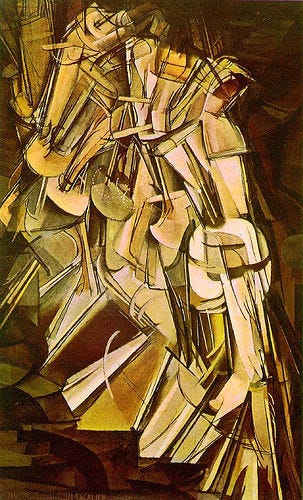
“Nude Descending a Staircase, №2″ by Marcel Duchamp

Consider the Cubism movement in visual art. What an ambitious goal it was, to portray all of the perspectives of objects, people, and scenes simultaneously to the viewer — to stand outside of the boundaries of time and space — conveying that transcendence visually.

The impossibilities abounded! And yet, the likes of Duchamp, Braque, Picasso, and their cohorts did just that. Even if you, dear reader, are in the camp that believes they did no such thing, did they not at least show that it is (after all) possible? Didn’t they shed the necessary doubt on the impossibility that previously seemed so damned certain? Perhaps the product did not look the way that you expected it to look, but is that their problem, or yours?

Put aside your expectations of what you think a thing should be like — how it should be received. It will only get in the way of actually creating something — or at least some part of something — special.

You can revise the meaning of the terms of your expectations, and of your purpose, to fit what you did end up creating. Just say to yourself “this thing is [adjective x] and though it doesn’t appear that way, here’s why it actually is [adjective x] after all.” Now that’s creativity.

Even if the creation itself is not conventionally creative, your interpretation will be. And that kind of post-creation creativity can then further make those who consume the work that much more creative by challenging them to adopt an unconventional interpretive standpoint. It can be literally transformative. And isn’t that — after all — what creative work should be?

Did you smell was I was cooking — so to speak? Subscribe to Woolgathering — my weekly newsletter. No spamming, no selling. Just one weekly treat.

A Meditation on Cool

Stumbling, Bumbling, but Mostly Coherent

I can’t remember the first time I heard the word “cool”, but I feel like I instantly knew what it meant. I think there’s something in the sound of the word itself — the way the sound waves bounce off the tongue on that last “l” sound. The way your lips have to be pursed like you’re blowing smoke rings, or kissing a seductive stranger. The way it all begins in your throat — almost guttural and filled with bass.

But I feel like coolness — for most of us — is much like the way Supreme Court Justice Potter Stewart thought about pornography:

I shall not today attempt further to define the kinds of material I understand to be embraced within that shorthand description, and perhaps I could never succeed in intelligibly doing so. But I know it when I see it.

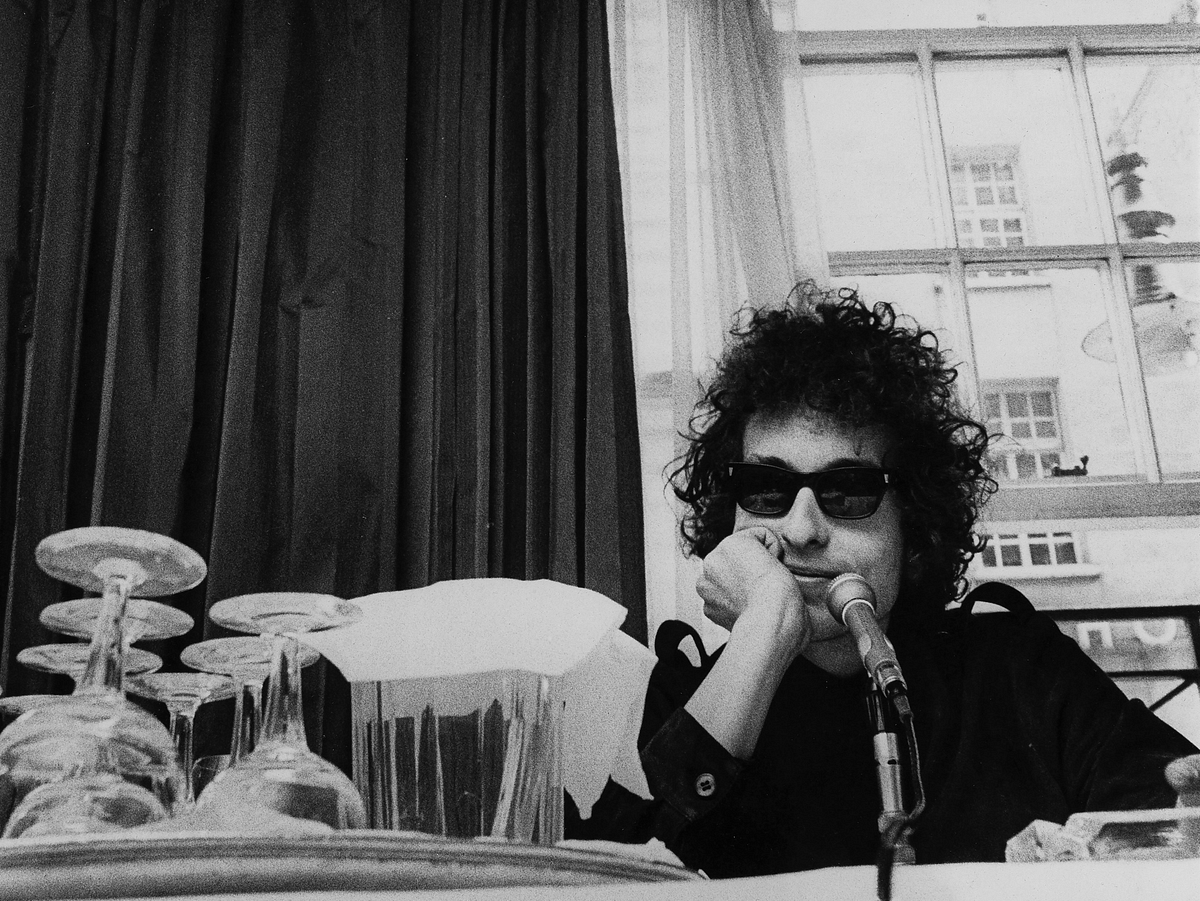
We can spot cool. Miles Davis, a young Bob Dylan, Simone de Beauvoir. The list zig-zags through history. But what is it that makes them cool? Why is it that they just strike us as cool?

I think that though it seems to be something we see, it’s actually happening well below the surface — we just happen to catch a feeling by looking at those who have grabbed onto something.

What I think they have grabbed onto is an ineffable existential understanding of the human condition. They have tasted the absurdity of the web we weave, the futility of worry, the ineffectiveness of expectations and desire, and are shrugging it all off before our eyes — and it bewilders and amazes us.

A lot of people think that true cool comes from just not caring. Nothing could be further from the truth.

Being cool requires the kind of not caring that comes from countless deep and dark moments of really caring — solitary and searching moments. Moments where emotional intensity builds to a crescendo of intimacy with the secrets of the universe, and collapses into exhaustion and repose. But we never see those moments. We just see the results — and we are enchanted.

I think that cool is the result of taking a long hard stare at the abyss, the abyss which — as Nietszche warned — stares back. It’s the result of staring at that abyss as it stares back, and refusing to flinch. It is desiring what everyone desires so badly and so much more intensely, that you no longer desire it. It is life after life after death — a post afterlife. It is to be so utterly authentic that it becomes clear that there is no self to be true to. It is the kind of obfuscation that can only come from being completely and totally clear. It is all of these things wrapped up into one.

I guess what I’m really trying to say is that I don’t see cool as much as I used to. It may be that I’m not seeking it out like I used to, but I just get the feeling that cool has eluded us at this time in history. I’m sure that we will once again encounter it, and it will feel just as it used to. Until then, however, I keep an eye out for it. Not too eagerly, of course, but just kind of leisurely, and, well — cool.

What about you? Yeah, you there. What say you?

Dear Entrepreneurs: Your Startup is About the People — Or at Least, It Should Be

credit: Pixabay.com

On Failure Porn, Business, and Its Real Purpose

My day job is at a company that was started by two brothers when they were in their twenties and thirties, respectively. Back in the early 90s, no one was really calling anything a startup — let alone a business in the manufacturing industry. But for all intents and purposes, they co-owned a startup. That startup is now 25 years old, and has grown to over 125 people in 4 countries, on 2 continents. It’s nearing middle-age.

Recently, the two brothers took us on an off-site retreat for members of leadership and the sales team (of which I am one). They kicked things off by giving an overview of what they saw as the future of the company. By the end of the presentation it became clear that their sales and operating income goal numbers weren’t the main focus for them. All of the metrics were taking a backseat to another number — one that they put up alone on a separate slide of the presentation.

What’s in a Number?

They let us all look at the number at take a guess at what it represented. After a few minutes they revealed that it represented the number of employees that worked for them, along with the number of dependents they had. It represented the number of people that depended on them as leaders being able to keep the business running, and running profitably. It represented the number of lives (at minimum) that they were positively impacting.

Now, I’m usually skeptical about any attempt to represent businesses as anything but out for increasing profits, but this one got me. It may have been how sincere they were in their delivery. It may have been because I had not seen that done before by another business. But very likely, it’s because it touched on something that I had known all along about businesses, but that I had not quite teased out and up to the front of my mind.

Purpose and Failure

Businesses are about making things better for their people — where the term “their people” can be as wide a notion as is deemed appropriate. Profitability is the goal, but only because it helps the people by providing them a living and purpose. Every goal — be it growth, customer service, global footprint — should be in service of doing better for your people. The moment you’re not doing it for your people, that’s the moment it all becomes empty.

So yes, making a billion dollars and getting acquired may be the goal du jour for a lot of startups now, but if your people don’t end up sharing in that wealth and success, you’ve failed. You and a few partners may be rich, but you’ve failed. And not in that sexy way that people are writing articles about — but a moral failure. You did something wrong, and it hurt others. That doesn’t mean you’re a bad person, it just means you have amends to make.

That’s part of why these articles glorifying failure in business scare me a bit. I’m all for ensuring that people feel okay taking risks and falling down, but we should never glorify the exploitation of the faith and cooperative spirit of others.

If your startup “failed”, but you walked away with a wad of cash while you left a bunch of people without income — that’s not sexy, that’s a tragedy. So do me a favor and if you write an article about that particular failure, make sure to talk about how it affected your employees — not just what 5 things you learned from it that will help you build the next business.

Care About More Than Your Product

I want to be clear here. I’m not trying to give advice, I’m pleading with the entrepreneurial culture that I read about to embrace a new idea: caring about your people. This doesn’t mean providing nap pods, healthy snacks, and free gadgets — though that can be part of it. It means ensuring that your business is sustainable, that your crazy exponential growth rate isn’t so crazy that in 5 or 10 years, you’ll have to slash 1/3 of the jobs at your company.

Caring means acting responsibly. So while taking bold risks and making moonshots is sexy in the short run, that becomes harmful in the long run if it means having to chop up a company and let a bunch of people go. Caring means caring about the people for whom your company is more than just another of several income streams — it’s the better part of their day, and their only source of income.

Silicon Valley and all of the companies heavily invested in it wield an amazing power — truly amazing. But that power — as Uncle Ben famously told Peter Parker — comes with an equally amazing responsibility: the responsibility to the people that work for you. That goes from the C-suite all the way down to the people you hired to do order fulfillment.

Sure, don’t fear failure, if that makes you do great things. But understand that even if your entrepreneurial failures don’t hurt you, they hurt those who worked for you. They bought in, and you owe them for that.

Thanks for reading. If you liked this piece, consider subscribing to my weekly newsletter. No spamming, no marketing.

Red Blood, Blue Tears

The Chicago Cubs and What This Year Means for All of Us

We all inherit certain shared histories — ones that we know and feel intimately, but that others know little about. We try to relay them as best we can to others, but the longer the history, the deeper the emotion, the harder it is to make others appreciate it. That is one of many gaps that exist between people. As I sat in my living room with my wife and 2 year-old daughter on Saturday night, as we watched game 6 of the NLCS begin, I experienced that gap firsthand.

You see, as the first pitch was thrown out a Wrigley Field, and the crowd erupted, I tried to convey to my special ladies just how special this night could be. I felt myself grasping for the right words, and failing miserably. But as the third pitch to the Cubs’ launched off the bat of Dexter Fowler for a double — and the crowd exploded to dangerous decibel levels — I let them do the explaining for me.

Not a Dry Eye

And then, in the top of the 9th inning, with 1 out, as it became apparent that the Cubs were on the verge of winning their first pennant in 71 years, the cameras began panning across the sold-out crowd in attendance at Wrigley Field. 2 out of every 3 people they showed were crying (including Bill Murray). At that point, I ceased having to explain anything. Those tears — and the ones I myself was holding back — said it all.

After a double play ended the inning, and the game — and the crowd reached a noise level rarely achieved by humans — I called my mother. She was bawling, even after 5 minutes. You see, she and her estranged brother had not communicated in nearly 20 years. She desperately wanted to speak with him, but he would have none of it. It was a line that he had held firmly. On a whim, after the Cubs made history, my mom reached out to her brother. She texted him. He texted her back.

For the first time in almost 2 decades, a brother and sister were talking again, because the Cubs won the pennant. That’s the power of a shared history. It has the power to topple walls of division and resentment — if even for a few brief moments.

It’s About More than Baseball

So yes, it is about baseball. It’s about breaking a supposed curse that has kept the Cubs from a glory that every other franchise as old as them has felt at least once in the same amount of years. But it’s also about more than that. It’s about a shared history. It’s about shared slogans, rituals, conversations, memories, victories, and defeats. It’s about one of the ways in which we lose our differences — just for a blip on the timeline of our lives — and have the same hopes, and feel the same emotions.

The Cubs are not done yet. They need to win 4 more games to win the World Series — something they have not done in 108 years. 108 years of disappointment, of feverish optimism, of assuring anyone who will listen that however bad this year had been, next year will be the Cubs’ year.

It may well be that “next year” is here. But whatever takes place over the next few weeks, a certain truth about the power of sports has been revealed. Sports can provide us with something beautiful, something unifying, and at times something so emotional and cathartic that it transcends the sum of its parts.

I have by no means lived through the long history of disappointment that older Cubs fans have, but I have lived through my share. I have always retained optimism, in 1989, 1998, 2003, 2008, and 2015. More importantly though, I have always retained an appreciation for just how special Cubs fandom is.

So I’ll say this in a way that I hope conveys all of the spirit and shared history that I feel as I write it: Go Cubs Go! Let’s close this 108 year-long chapter. Let’s turn a shared history of disappointment into a shared history of a long struggle valiantly won.

On the Concept of a “Side Hustle”

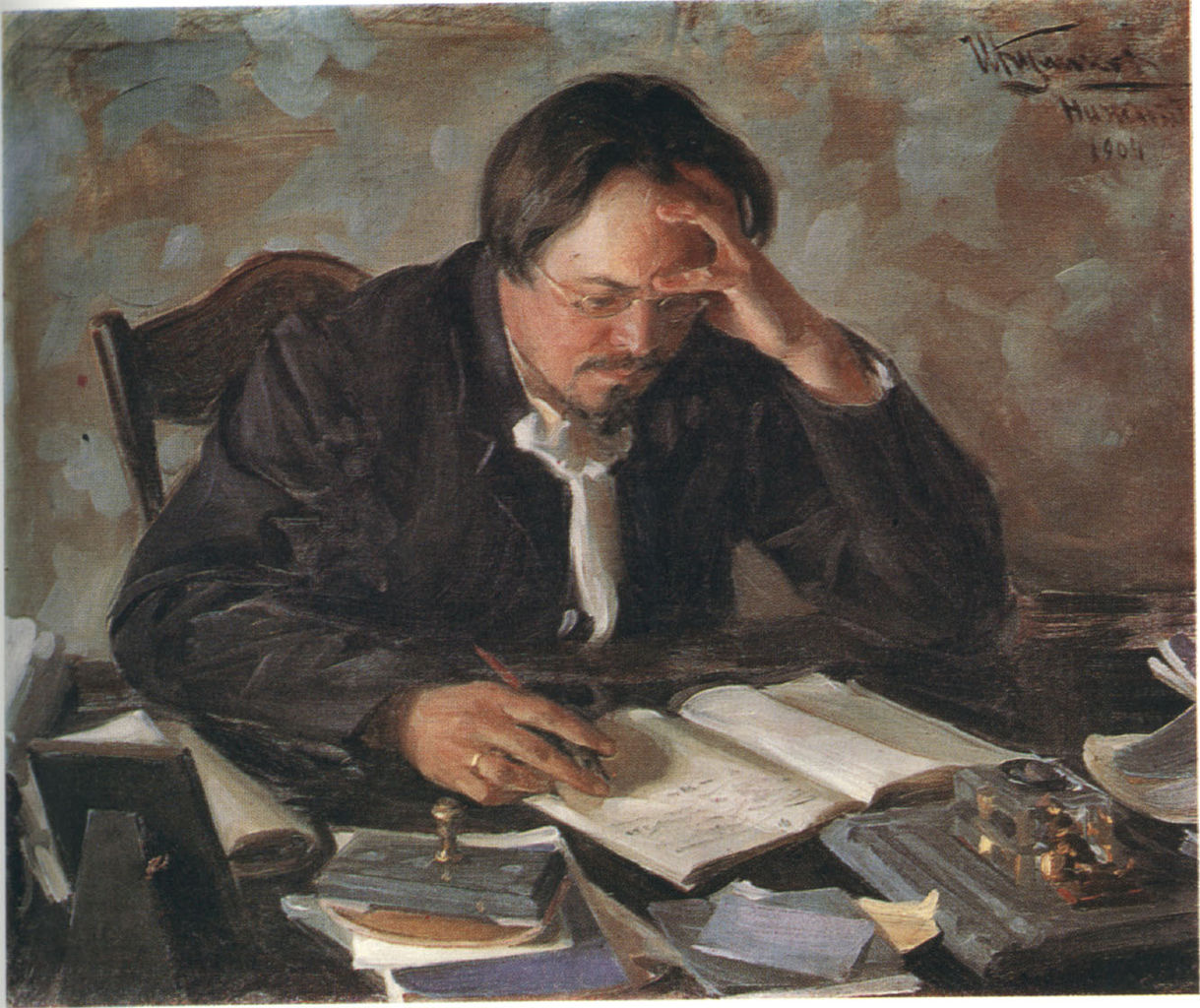
“Painting of Russian writer Evgeny Chirikov” by Ivan Kulikov

Passion, Payment, and Perseverance

All throughout my childhood, my father worked 14-hour days at a job he hated. He would come home to cold dinners, after I was asleep. On weekends, he did whatever side-jobs he could to make money so we could move out to the suburbs, where the schools were better.

In the moments between his long and exhausting workweeks, my dad pounded the following message into my head: don’t take the job for money, get a job you love. That’s the key to happiness.

His benchmark test was this: if what you do in your job is something that you would do for free anyway — because you love it — that’s the ideal work.

I Ran In Search Of…

I took that advice and ran with it. I ran looking for the thing that would be a reward in and of itself — career path be damned.

I ran to art school. When I lost the passion for that venture, I ran to majoring in philosophy. I ran back and forth from there to political science. I ran all over academia, making sure that I found whatever it was that was going to ensure that I didn’t feel the way my Dad did during his working life.

I ran through some pretty unsavory situations in my twenties — all in the name of finding that job that passed my dad’s test.

As it turns out, I ended up running into a regular 9 to 5(ish) office gig. Why? Because that is where the money is — because there are more important things in life than professional success, and those things require money. Most of the stuff that I do from a day to day is not stuff that I would also do for free, so the job fails my Dad’s test. But as most of us have realized, part of growing up is realizing all of the ways in which our parents were wrong. Sorry, Dad, but as a millennial, I had to “hack” your advice a little.

The Hack: Terminal Side-Gigging

All of those places that I ran above: art, philosophy, political science — were all roads that ended in cul-de-sacs. What I ended up realizing was that writing was the thing all along. What I wanted to do, what I would do — and was doing — for free was writing. It only took me 14 years or so to realize it.

So yes, I work a regular jobby-job. I do things with spreadsheets, I give people performance appraisals, I deliver reports to and negotiate with customers. As a 20 year-old, I would have turned my nose up at such a job description. I would argue that a job like that wouldn’t fulfill me — it doesn’t pass my dad’s test.

But now I know better. As with everything, I’ve hacked, I’ve found a work-around. I have the side-gig. I write stuff like this online for free. I do it because I honestly enjoy it. It fulfills me to get this stuff out on the page, and to know that the thoughts that I think help you readers — no matter how half-baked they may be.

So why do I relay all this? How can this be generalized to apply to others? I think that the concept of a side-gig can save us from that nagging feeling that we’re not squeezing everything out of us in the jobs that pay us. It offers a safe place for our passions to live and breathe without being tainted by the worries and compromises of commerce.

Does that sound too hippy-ish, too immature? Perhaps it is. I struggle to evaluate that. But what I do know is that I feel thrilled and alive when I’m writing — especially about ideas that have grabbed hold of my interest. But if I also had to keep tinkering and worrying about how to monetize it, I’m not so sure that I would get that thrill. The more that became a part of the work, the more it would end up being like a regular job. So for now, I keep it as a terminal side-gig. The thrill comes first, and the money comes later.

The Whims of the Market

In the back of my mind, I think this could be a more sustainable model. I can tinker with my writing in the quest to do it better as writing, rather than trying to make it more marketable as a product. Then, if and when there emerges a market for what I’m already doing, the money comes without me having to twist and contort my writing to try to hook up with the market. My work can attract and mold some portion of the market — not the other way around.

Is this a crazy dream? Probably. But for now, I can keep doing what I’m doing — to varying degrees. If it works out, and I get paid to write what I love writing — great! If not, I’ll keep writing what I love to write. I’ll be able to keep the thrill of doing it untainted because I’m doing it to write better, rather than to leverage it into a career. It’s an odd position to take, for sure, but I’ve been thinking a lot about it lately.

So I guess here’s the more general thought: if you have a thing that you love to do, but it doesn’t match what people are falling over themselves to pay for, keep it as a terminal side-hustle. Keep doing it and honing it. Don’t hone it to make it more market-friendly, but hone it to to make it better in and of itself. So when the winds of market demand change (as they so often do), they may blow in your direction. And guess what. All you have to do to monetize your thing is to just keep doing your thing — exactly how you have been. Now how cool would that be?

I’d love it if you would support my side-hustle, no money required. Subscribe to my once-weekly newsletter, Woolgathering. One email per week. That’s it.

Hacker Noon is how hackers start their afternoons. We’re a part of the @AMI family. We are now accepting submissions and happy to discuss advertising & sponsorship opportunities.

If you enjoyed this story, we recommend reading our latest tech stories and trending tech stories. Until next time, don’t take the realities of the world for granted!

Write, To Remain Silent

credit: Anton Fromkin

Yet Another Way that Writing Will Save Us All

Silence is an important part of the effective person’s repertoire. That may sound counterintuitive, but hear me out. Effective people are intelligent — not in that they know all sorts of facts and pieces of data — but in that they understand what is going on in their immediate environment, and can realize connections and dependencies that others can’t. This intelligence, though, comes in large part from being able to listen and to think deeply.

I’ve written before about ways to listen more effectively, and those ways all involve saying less and leveraging silence for your own benefit. The more you allow others to say, the more you can gain insight into valuable things that can help you achieve your goals.

But being silent is difficult. In order to do it, you need to be able to clear your mind of all of the nagging thoughts that muddy up your ability to listen effectively. They are noise, that drown out the signal of the things you should pay attention to. Luckily, those of us that are constantly thinking and find it hard to quiet our minds in order to better listen have a great tool at our disposal: writing.

Make the Clackity Noise

One of my favorite writers on the internet has a great piece in which he extolls the virtue of “making the clackity noise” — i.e., typing on a keyboard. Y’know, writing. Dig it:

The only way I can tell I’m relearning this is I notice that the keyboard has been making the clackity noise for several contiguous minutes. I see that words have started to come out and sometimes they’re good and almost always they’re not and increasingly I’m not all that worried about it either way.

I’ve learned that my job is to just sit down and start making the clackity noise. If I make the clackity noise long enough every day, the “writing” seems to take care of itself.

Take this and apply it to thinking, with no goal to produce something publishable. To make myself clear: I am saying that the best way to clear your mind of the noise is to write about the noise. As you write, you will think, and as you think, the noise will (after a time) quiet.

With that noise out of your head, you can get back to silence. Once you can be (mostly) silent, you can listen better. Once you listen better, you can gain more insight, make more connections, and become wiser and more effective in your endeavors — whatever they may be.

A Bonus: Writing Helps you Look Better

Anyone who would be considered a “high performer” will tell you that preparation is key to success. I can’t deny that. You know what I’m going to say don’t you? Writing is excellent preparation. Literally sitting down for 5 minutes to bang out a mini-manifesto about any given topic on which you need to make a decision gives you infinitely better chances of coming to sound conclusion — one that you feel better about.

On the heels of being able to better decide on what to think and what to do about things, you will end up feeling and looking a heck of a lot better. You’ll be less frazzled and seemingly unprepared. You’ll know your own positions and plans better. You will be calmer and more collected. You will better understand what is important to you, and who you really are. All because you put some time into sussing out your thoughts by making the clackity noise.

Writing clarifies. Writing purifies. Writing makes your thoughts into roaring engines of achievement.

So go make the clackity noise.


Like what you read? Consider subscribing to Woolgathering — my once weekly newsletter. No spamming, no selling, just me imparting value into your inbox.

Two Quick Notes

Hey everyone,

I have two quick notes, and won’t take up much of your time.

  1. I am closing up Your Fool Laureate. I encourage you to follow a publication that my good friend, Stephen M. Tomic and I have founded: The Junction. It will be everything you’ve come to expect from me and then some.
  2. I have had a newsletter for a while, but haven’t promoted it well. It’s picking up steam, and I’d like it if you could subscribe. Once per week, no spammy BS. It’s called “Woolgathering”. Subscribe here.

Godspeed

I Don’t Read

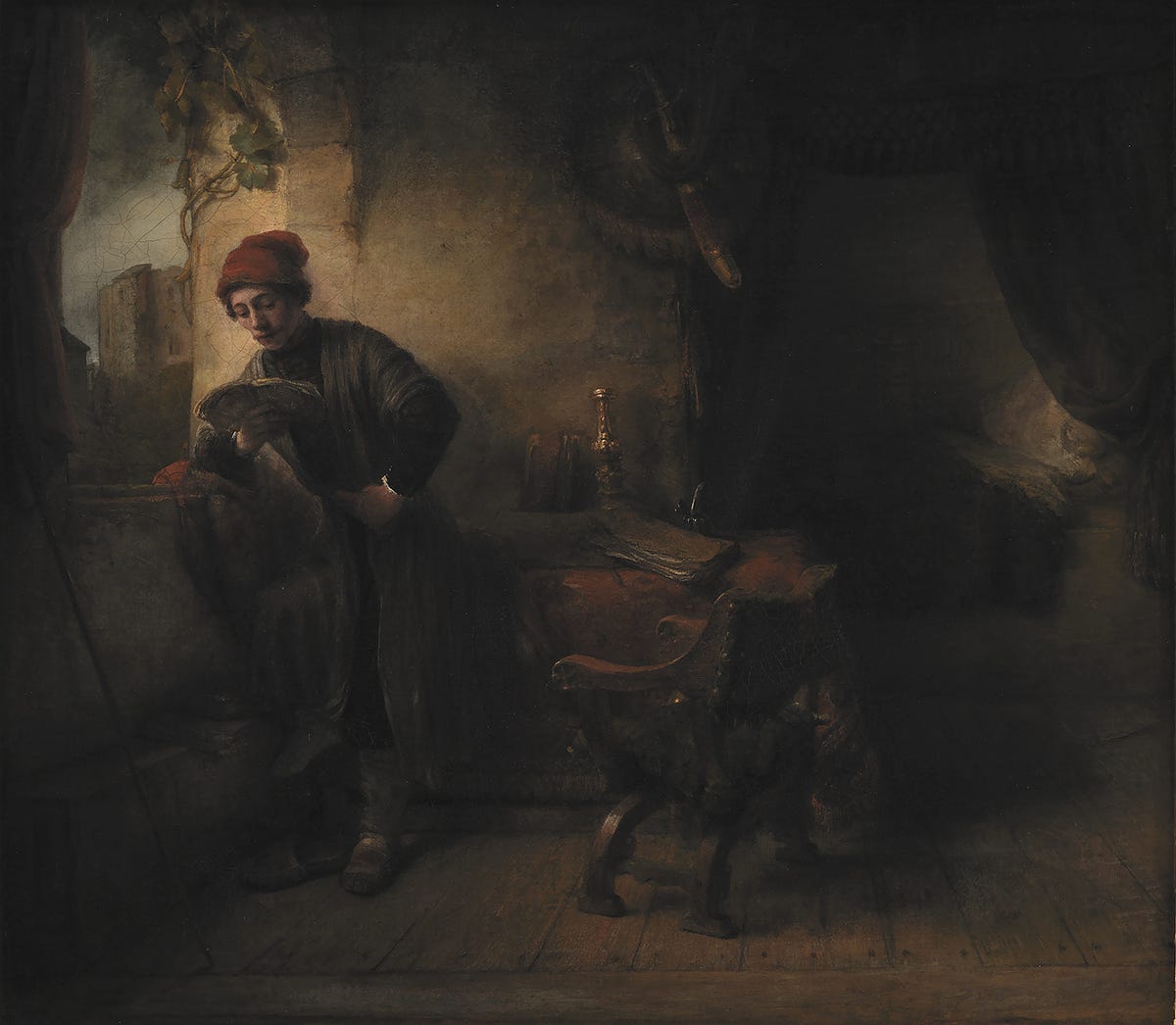
Willem Drost:

“The Student”

I Search. And it Works.

Of the many bones of contention that my wife has with me, one of them is that I don’t read. We joke about the biggest con of my life being how I was able to get a Master’s Degree, and be accepted into 3 PhD programs without reading anything.

Of course, that’s an exaggeration. I do read. I read a bunch of articles (great ones) here on Medium. I read a ton of articles and papers online. I read some books (though mostly non-fiction). But I don’t do it like my grammar school teachers taught me to do it.

Reader vs. Writer

I don’t pick up a book and start at the very first page, reading every word until the very end — unless it’s fiction. Honestly, I think that only fiction books and biographies are meant to be read in a certain order (and I’m not entirely sure about the latter, either). That has everything to do with the differences between the writer and the reader.

Think about it: just because the subject matter of the book makes sense to the author in a certain order doesn’t mean it will make sense to the reader in that order. As a reader, you have different anchors in your knowledge base that the author does not. Those anchors may help you understand something in the middle of a book much better, and from there, you can wander to the front portion of the book — placing markers for yourself at various points along the way.

Books are Also Tools

There’s another reason that reading sequentially isn’t really all that effective. Sometimes you are using the book in question as tool, for gaining knowledge about only a certain portion of a topic. Like any tool, there are at least a handful of ways to use it and purposes for which to use it. You don’t have to use it for every single one of the intended purposes.

You may get a book on quantum mechanics, but you aren’t looking to understand everything about the subject, just a certain portion of it. So for your present purposes, read the portion that gives you what you need then and there. Does that mean you should disregard the rest? For now, yes, but I’d hope that if you were interested in quantum mechanics in the first place — even for a knowledge of part of it — your interest would be retained and magnified by learning about a portion of it. That’s just good practice — keeping a healthy level of curiosity.

A Different Kind of Reading

Mortimer Adler — champion of the Great Books movement and liberal education — wrote a book called (interestingly) How to Read a Book. In it, he proposed that there are 4 ways to read:

  1. Elementary reading: the front-to-back method I described above.
  2. Inspectional Reading: sometimes (mis)classified as “skimming”. It’s a way to parse out information about the book and topics in it — both to decide on what is worth reading, and to gain an initial understanding of the topic for contextual purposes.
  3. Analytical Reading: Deep, abiding reading. The kind of reading that you’d image those in rabbinical training do.
  4. Syntopical Reading: Beyond just reading a book, this is about reading for understanding of the greater point the author is making. Other books are brought in — differing opinions, related subject matter, etc. Reading in this way is about connections and holism. Many times, it can mean reading several books at once — some of which are read only partially, to provide support for another book.

Like I said, I don’t do the first kind of reading. I tend to favor types 2 and 4, where I will do type 3 on a select few texts.

The Anti-Library and The Search

Author and philosopher Umberto Eco is famous (infamous?) for having what Nassim Nicholas Taleb referred to as an “anti-library”. Essentially, it’s a large library containing mostly unread books — far more unread than read. Taleb calls it an “anti-library” because it goes against the traditional purpose of the personal private library, which was to show off. He explains:

Read books are far less valuable than unread ones. The library should contain as much of what you do not know as your financial means, mortgage rates, and the currently tight real-estate market allows you to put there. You will accumulate more knowledge and more books as you grow older, and the growing number of unread books on the shelves will look at you menacingly. Indeed, the more you know, the larger the rows of unread books. Let us call this collection of unread books an antilibrary.

I have an anti-library.I have many, many books that I acquired (mostly during graduate study), but never read. However, I have used each one of them — from time to time — as a lily pad. I jump from one book to another, following not the sequence of the chapters of any book, but the path of and connections between ideas. I’m chasing truth here, so I have far less concern with a given narrative, and far more concern with the connections that I find between the ideas in my books.

So, yes, I do read. But the word “read” tends to have a connotation of sequential movement through a text in the way that the author has laid it out. I simply do not play that game much anymore. I search. I search and connect. It literally thrills me to do it. I couldn’t imagine doing it any other way.


Would you like more stuff like this (in smaller bites)? Click here to sign up for my email newsletter. Never spammy, never more than 1x per week, always worth a few minutes of your time.

The Best Leaders Follow

credit: Colin Houston

It seems that nearly everyone and their sister can start a company these days. They can hire people, get some seed money, and get off to the races. But what happens when that company grows? What happens when all of the sudden there are 30 people working for it? 50? 100? How does it keep going and keep growing?

The answer, of course, is leadership. Actually leadership is the answer to many questions other than the one about businesses. It’s the answer to questions about how a family keeps going and becomes a loving, supportive sanctuary for its members. It’s the answer of how good parenting is done. It’s the answer to how a group of friends can ensure they all have time together away from everything to keep up a thriving relationship.

It’s leadership all the way down.

But don’t get it twisted, leadership is not one person climbing on a milk crate and yelling to others what needs to be done. Leadership is not one person screaming at low performers about how they demand perfection — yesterday! People who call themselves leaders do that, but such things are not what makes a leader.

I’m in a leadership position. I have been for a few years now. I have a small team of mostly veterans — people who have been doing the work, and doing it well, for years. I’m nominally their leader, but I’m not leading yet. I’m trying, but I’ve got work to do.

The work I’m going to be doing is following. That’s right. I have come to learn that real leaders — whether they have the title or not — are good followers. Real leaders follow — in 5 important ways.

They follow the questions to see where they lead.

The best leaders ask questions — a lot of them. Simple ones, sometimes stupid-sounding ones, but certainly many of them. Then they wait to hear the answer, and they listen to it with the intent of understanding. Which often causes them to ask follow-up questions.

Questions allow them to find out what’s going on. Questions tell them how their people are doing. Who’s doing well, who isn’t. Questions tell them what the real problems are, and who might have solutions to them.

Most importantly, questions lead the leaders. They lead the leaders to new visions, new priorities, new breakthroughs, and ultimately to success.

They follow their employees to the ends of the earth.

Leaders must have faith in their employees. They must trust them. They must be willing to go to bat for them against detractors, and they must be willing to follow their employees to the ends of the earth in their search for innovations and answers.

That following needs to be collaborative, enthusiastic, and encouraging. If it is, it creates and cements strong bonds between leaders and the led. Those bonds ultimately outlast the stress created by up and down business cycles. Those bonds become what the company is, under all the earnings reports and marketing campaigns.

They follow the heartbeat of their organization.

If a leader cannot tell you what the heartbeat of her organization sounds like, they have fallen short. A leader needs to know the people and to know how things are going and where they are going.

They need to know the ups and downs in morale, the proud moments of the teams, and the hang-ups of those trying to push projects through. Calamitous as it may be, the sound of all of that work must be pulsing through the eardrums of the leader — a soundtrack to her days.

They follow their vision.

People will work for a leader if that leader has a clear vision, and if that vision is one that clearly benefits each person in the company. If a vision not one that each person in the company can explain and do so proudly, it’s not a vision — it’s jargon and dogma. Thus, the “leader” who created it has not led, but merely pitched.

When people believe in what you say, and you do what you say, they come to believe in you. They come to push hard for you. They come to follow you to the promised land. But again, that promised land must be somewhere worth going.

They follow through.

A leader follows through on their promises. At the ground level, people must see the leader as the one person who can do what they say they will. Perhaps this means promising much less — it probably always means that. But even if few promised are made, but they are always kept, and kept as expected, it builds the leader’s stock.

In that respect, leadership is actually service in disguise. Leadership is actually many people agreeing to let you serve them, and this cannot be forgotten. As a leader, you are inspiring people with a vision, yes. However, that vision is actually the will of your people, not yours. You merely drew it out of them, and are reminding them of how vital it is. You are serving them in their vision, they just don’t always realize it.

Self-Help Titles and The Sincerity Gap

Of course I used this image! (credit)

A List of My Favorite Worst Practices for Article Headlines

  1. The phrase “Insanely Successful”: What does this even mean? I imagine a wild-eyed madman or madwoman roaming around the neighborhood in really expensive but wrinkled pajamas, yelling loudly at unsuspecting people about their 10 minute morning routine and their conference call with a VC firm. That’s pretty insane. Why not just successful? Wait, let me answer that: that adjective alone doesn’t get you the same amount of clicks, but adding a nonsensical adverb somehow attracts more clicks and (maybe) reads. It’s still a bad look.
  2. Using the word “will”: As an example “25,000 Productivity Hacks that Will Make You Happier”. They will make me happier? No room for doubt there, no room for them not to work — they will make me happier. It seems like an invitation to disappoint, but I guess it works. That’s why I’m not on the top of a mountain with my hands triumphantly raised, I guess (see title pic).
  3. Hacks”: Aside from sounding passé by now (if not actually being passé), what is a hack anyway? Is it just a better way of doing things? Well those have been around for a while, but didn’t go by that name. Is it a better way of doing things that is a workaround and kind of unconventional? Well, many of the “hacks” in these articles are actually not unconventional. They’re actually pretty conventional and well-known. Some of them are actually very structured and time-consuming activities, which to me seems like the opposite of a “hack”.
  4. “This” rather than a definite noun phrase: Maybe it’s just me, but I hate seeing a headline like “Instead of Pooping Every Day, Do This” — and other variants. It’s clearly a way to get you to click on the piece, but it’s often deceptive. I mean, give me something regarding what you’re going to talk about.
  5. Saying that something will “instantly” give you some result: To me, this is straight up snake oil sales. That becomes especially clear when you click on the article (you rube, you!) and read the tips or tricks with the promise of instant effectiveness. They end up being gems like “stop thinking negative thoughts” or “be proactive rather than reactive”. Now, don’t get me wrong. This is great advice, and on a technicality, the title is not lying to you — once you are doing those things, they will be instantly effective. The problem is that being proactive or stopping negative thoughts can’t be done instantly. You’ve been hoodwinked!

Do I think that all articles with these fails should be tossed in the trash heap? Of course not. I just think that they represent pitfalls that writers should avoid.

At a deeper level, I think that these “fails” represent what I call a sincerity deficit. It marks a difference between what the author says when trying to get readers vs. what they would tell you as a friend that they were trying to level with.

One of my main goals as a writer in this tricky space of self-help/personal growth/productivity space is to have little to no sincerity deficit. I want to write to you readers (no matter who you are) as I would speak to a dear friend that I was just trying to level with.

In the end, will it mean that my audience builds more slowly? Absolutely. But I believe that whoever does decide to read my stuff will stick around for the long haul because they feel that I’m being sincere. But as always, I could be wrong. I often am.


Did you like what you read? Click here to sign up for my email newsletter. Never spammy, never more than 1x per week.

Dear Medium, Thanks for the Sidebar

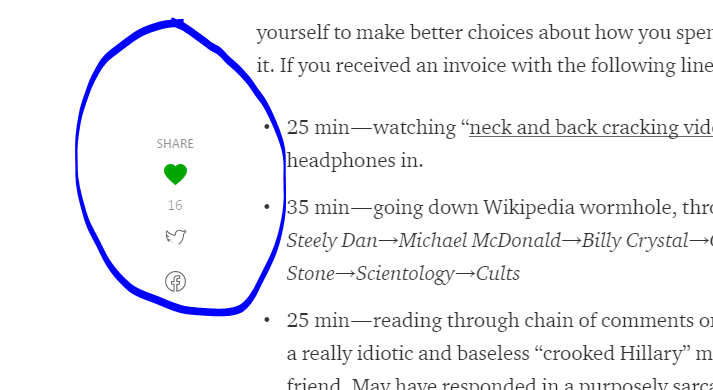
So I’m scrolling down a story today, and what do I see?

The sidebar. Yes, this is my own story. Don’t judge.

Not intrusive, just enough to catch your eye, but not enough to distract from the story. Smooth, Medium peeps, very smooth.

Keep on keepin’ on. I like where this train is going.

Love,

Mike