How to Harness the Overlooked Power of Negativity

Why the Demand for Positivity and “Solutions” Is Misguided and Stifles Growth

I was in a meeting once where a high-ranking executive at the company said the following (which I’m paraphrasing):

“I don’t want to hear people whining about what’s wrong at the company. Be positive and bring some positive solutions.”

At first blush, maybe this sounds okay. But I think it’s severely wrongheaded and dangerous. In fact, not only should we as leaders welcome complaints — we should encourage them. Actually, going even further, we should seek them out.

Negativity has real power, because it provides the ground from which positive growth springs. But negativity has to be handled precisely in order for it to be useful. I see 4 main directives that anyone in a leadership position should embrace when it comes to negativity:

  • seek out complaints — as many as possible
  • don’t create barriers to negative feedback, take them down
  • handle the negativity positively
  • encourage negative thinking and harness it

Seek Out Complaints — As Many as Possible

Since I began getting performance appraisals, I’ve tended to focus heavily on the areas for improvement in them. I am glad to get positive reinforcement from my managers, but I am way more interested in what I have been doing poorly at. If my manager has a suggestion about how I might improve it — great. But if not, no problem. I still want to know about it. I want to improve the things I’m not great at — if I can. I can only do that if I know what I’m not good at. And I can only know that through feedback — as much as possible.

Similarly, if you’re a leader in a company — especially if you’ve got significant skin in the game — you should be inviting all the negativity that people can muster. You should be drawing it out of them. You should savor it.

Why? Well, what is the job of a leader in an organization? What is he or she responsible for? Growth, organizational stability, direction, inspiration, etc. Well, let’s take growth as a case in point here. How does growth happen? Unless it’s by accident — which is usually reserved for very young and small companies — it happens by identifying areas of weakness and working on them.

Again, you can only get better at what you’re doing poorly at if you know what you’re doing poorly at. If you don’t ask what you’re doing poorly at, you probably won’t understand it. So ask for that feedback — no matter how negative it may seem.

Don’t Build Barriers to Negativity, Tear Them Down

The more you ask people to come not with problems, but solutions, the more you’re stifling the free and open flow of communication. Some of the most effective and revolutionary ideas are ones that originated only partially assembled in one person’s head. They needed to be put out in the open for others to take them and work with them more — to rework and improve — to build more onto them.

Think of it this way, you hire a building inspector to point out flaws in the structure. You don’t expect them to also plan how you’re going to fix it. In fact, if they did, you’d be a bit worried that somehow they’re working with the contractor to add more into the budget. So why do we feel like when people have criticism within a company, they should also be making suggestions at how to fix it? It simply doesn’t make sense.

Separate the mental tasks of identifying problems from identifying solutions. This way, you’ll get more and a better quality of each. And that’s what you should be looking for.

Handle the Negativity Positively

You have to be able to handle negativity in a positive way. All that means is that you listen, understand, and process what you’re presented. When people complain, ask questions — clarifying questions. Don’t defend, don’t deflect, and whatever you do, don’t operate on emotions. Just be open and receptive. Even if the negative feedback is dead wrong, and you know it in your heart of hearts, two things hold true:

  1. Lashing out at the person giving the feedback won’t really help you get better.
  2. It will help you to try to understand why that person gave that negative feedback — however untrue it may be.

Problems are never just problems — they’re opportunities. Now whether you want to explore those opportunities is a choice you have to make — but they are still opportunities nonetheless. When you see things in that way, it’s a lot easier to avoid getting bogged down about having a lot of problems.

Part of being a good leader means not letting problems overwhelm you. That means not getting defensive when people throw negativity and criticism your way. Even if they aren’t trying to help you, their feedback can be valuable — just look at what they’re saying from a neutral standpoint. Does it make sense? Does it have some truth behind it? If so, it’s useful; it can inform what you pay attention to as you go about improving.

The presence of negativity in a company doesn’t make a leader good or bad; every organization has pockets of negativity. But the way a leader handles that negativity can be what separates great leaders from bad ones.

Encourage Negative Thinking

Lisa Bodell wrote a book several years ago called Kill The Company. In it, she encourages companies to do an exercise where team members sit down and think of how they would take down the company if they were its number one competitor. It has been working wonders for many different companies.

Why is it so effective? It does three important things:

  1. It encourages a fresh point of view for negativity — that of an outsider looking to take it down through competition
  2. It breeds negativity, in the form of specific weaknesses that company has
  3. It harnesses that negativity to help make a company better by focusing on what would defend it against being beaten in the market

Negative thinking can be extremely useful, so long as it’s received in the right way, and then harnessed for the purpose of making things better. That is the work of a great leader.

The Takeaway

There will always be negativity within a company — no matter how positive a culture one tries to create. So it is the job of a leader to handle that negativity skillfully. That means 4 things:

  • seeking out negativity and complaints, with an intent to understand it
  • removing barriers to complaints and problems, which often means separating them from proposed solutions
  • handling the negativity in a well-meaning and strategic way
  • encouraging thought about problems and complaints, with an eye toward making them work for the company’s benefit


The Problem With Teaching Entrepreneurship

As we rush to foster the valuable goals of creativity and innovation, let’s not use the wrong means to achieve them.

I’ll be transparent with you: I majored in Philosophy in college. And now, I spend time in the business environment talking about productivity, improvement, and innovation. Did I make a mistake? Absolutely not.

On paper, my choice of major had little connection to the business world. But in practice, it has everything to do with it. The freedom of philosophy allowed me to explore the limits of creative and innovative thought — unencumbered by most practical concerns — at least for a while. It’s the same type of education I received as a child. Free from talk of turning education in to profit, free to explore, learn, question, and create.

But that was the 80s and 90s — we were so naive, right?! Fast forward to today, when there is more and more of a push for entrepreneurship to be the paradigm in early education. Teach kids to think in terms of profit, loss, growth, scale, and markets — and we’ll have a million of the next Elon Musks! They say.

I’m not so sure. In fact I think that approach may well backfire — badly.

How the Entrepreneurial Model Constrains Thinking

I chose the major I did because I wanted to make a living playing with ideas. But I didn’t want my play with ideas to be corrupted by concerns about what was the most practical idea, what would get the most grant money, or what would be the best way to fuel the profit margins of a new or existing company. My intentions were pure. I wanted to explore the depths of the most abstract and confounding questions — and attempt to find answers for them. I wanted to be able to do that freely, and without regard to any other goal save finding the truth. How naive of me.

Enter the age of the entrepreneur. My kids, and my friends’ kids are going to be raised in an environment where entrepreneurs are the heroes and idols. They will be bombarded by Shark Tank competitions at their schools, and kids their age starting companies and shipping products or apps.

I have no problem with the aspect of this that focuses on nurturing creativity and innovation. What I do have a problem with is that the message is delivered with an undeniable and explicit connection to turning a profit.

My reason for being circumspect about this profit motive is that I fear that an idea explored for profit is an idea only partially pursued. What I mean here is that kids need to be able to play with ideas. By “play” I mean free play, where the following things are true (courtesy of Dr. Peter Gray):

1. It is self-chosen and self-directed

2. It is activity in which means are more valued than ends

3. Play has structure, or rules, which are not dictated by physical necessity but emanate from the minds of the players

3. Play is imaginative, non-literal, mentally removed in some way from “real” or “serious” life; and

4. Play involves an active, alert, but non-stressed frame of mind.

The key here is that free play is about play in a zone removed from clear and decided goals — especially those placed on us by the business world (profit and growth).

So yes, let’s get students excited about creativity and innovation — let’s train them to do those things. However, let’s not make the mistake of thinking that the way to do that is to lure them in with entrepreneurship — which is centered around the constraint of profit-seeking.

Even Entrepreneurs Used to Be Something Else

Learning entrepreneurship has its place, but its place is not as the basis for learning about creativity and original thought.

When the goal is profit, the ideas will all start to resemble one another — which doesn’t sound either innovative or creative. When the goals are relaxed, and the mind is allowed to roam free for a while, we’ll be amazed by what the young minds bring back to us.

Does this sound crazy? It shouldn’t. For two reasons:

  1. One of the most innovative and disruptive companies — Amazon — has famously not turned a profit for most of its existence. It now rivals Apple for market capitalization.
  2. We should still believe in the division of labor. Thinking of original and creative ideas happens in one type of mindset. Thinking of how to take great ideas and make them profitable happens in another. When you try to combine them into one mindset, both suffer.

Let Me Be Clear

So what am I saying? Am I saying that we should forget about profit and just let kids think about whatever and see what happens? No — of course not.

What I am saying is that there is a such thing as the hedonistic paradox — which is roughly this: if your only goal is pleasure, you tend to have a much harder time actually deriving pleasure from anything. In other words, if pleasure is your goal, you will only really get pleasure if your aim is at some other goal. Achieving that goal will then give you pleasure.

I suggest we recognize that the same thing might be true with profitable ideas. The more we try to think of our ideas in terms of immediate profitability, the less creative we will become — and the fewer profitable ideas we will inevitably think of.

Let’s not stifle the next generation by making them all think like entrepreneurs. Entrepreneurship is exciting precisely because people bring in all sorts of background experience into it. The more we try to mold the next generation based on current entrepreneurs, the worse off future entrepreneurship will be.

Mr. Sei’s Horse: A Cautionary Tale about Quick Judgments

There’s an old Zen story I heard a little while ago, and I was immediately struck by it. The origin isn’t exactly clear — it’s attributed to Gerry Shishin Wick. It goes something like this:

Mr. Sei lived in a small, poor village. He owned a horse and was one of the wealthiest members of the village. His neighbors used to come to him and tell him how lucky he was to have that horse because he could plow much more field and have a larger income and take better care of his family. Mr. Sei was a very wise man so he didn’t say anything. He just nodded his head.

One day, the horse ran away and his neighbors come and told him how unlucky he is that his horse had run away. Again Mr. Sei nodded his head.

Then the horse returned and a second horse was following. Now Mr. Sei had two horses. The neighbors came and said, “How lucky you are that your horse ran away and came back with an extra horse! Now you have two horses!”

Again Mr. Sei just nodded his head.

The next season, Mr. Sei’s son was plowing the field with the second horse and had an accident. He broke his leg.

The neighbors rushed over again. “How unlucky he is that he had that second horse, otherwise his son never would have broken his leg and now he can’t help him in the fields.”

Again, Mr. Sei just nodded.

Within a few weeks, war erupted in the province, and the lords were conscripting all of the young men to fight. Mr. Sei’s son had a broken leg, so he didn’t have to go into battle.

The neighbors came again and told Mr. Sei how lucky he is that his son broke his leg.

This story has no end and continues today.


I love this story. It is a simple illustration of how utterly silly quick judgments tend to be. What we think is terrible right now just might — in due time — turn into an advantage, or at least something inconsequential overall.

If we take a cue from Mr. Sei, we can avoid the unnecessary hand-wringing and lamenting that cause us so much stress and anxiety. Instead, we can withhold our judgment for bit — wait for things to pan out, for the dust to settle. If we can do that, we might find that our worry, stress, and lamentation was completely unfounded.

It’s hard to be like Mr. Sei. But I’d like to think that the payoff is worth whatever work it takes.

Did you find value in this piece? Consider subscribing to my weekly newsletter — Woolgathering. It’s one email per week, with great ideas to add value to your life and work.

Radical Compassion: A Radically Different Approach to Productivity and Growth

Two Simple Practices to Forge a Healthier Path

There are times when I wake up and from the jump, I feel like I’m way behind. I feel like I’m in slow motion. I feel like I’m already stumbling through the day. I spill coffee everywhere. I skip working out. I fail to catch up on emails before the new ones come rushing in. I don’t write a damn thing. I feel like I’m just buried.

I have the drive, I have the dreams, I have the goals. But I struggle. I stumble. I fall behind.

And what’s worse, I see all these people around me who seem to be crushing it. They’re organized, they’re ahead, they’re making an impact. I’m just watching from the sidelines, and I’m cursing myself for not being further along.

I’m assuming that many of you feel the same way from time to time.

So why does this happen? Why do we get so disheartened by all of this success around us? Why is it so hard to just keep going — to carry on? Allow me to offer up two possible reasons:

  1. We’re doing too much — we just don’t know it. 
    Often times we are trying to do too many things at once. We think we’re just doing one project, so that should be easy, right? But actually, each project involves a lot of things: analyzing, organizing, planning, brainstorming — and we often try to do these all at the same time. 
     
    These are all different job descriptions, with different workflows, and they get in the way of one another. So when we do these myriad other things — at many times unknowingly — we exhaust ourselves. We scorch the earth behind us, and make it that much harder get things done later on.
  2. We let unrealistic expectations and desires govern our relationship with ourselves.
    We expect a lot from ourselves. We expect both a lot of volume and a lot of quality work. We also tend to also expect it quickly. As anyone in quality control or project management can tell you, you can’t have all three of those things. For one thing, when you have desires and expectations of creative work right off the bat, in what way are you allowing yourself a free and stress-free environment in which to really create? Sure, you may well have a goal — something you want to convey with your work — but at least until you gain momentum, don’t let that goal be a set of shackles on your process.

A Simple Suggestion: Be Radically Compassionate With Yourself

The problem with making mistakes, falling behind, and procrastinating is that it’s like a nuclear bomb. It’s bad enough that the blast is loud, bright, and destructive, but it’s the after-effects that actually do the worst harm. We fail, we fall behind, we mess up, and that is bad enough. But what is worse, we then proceed to beat ourselves up about it. In some instances, the beating is long and drawn out. There is a lot of negative self-talk.

So in terms of solving the problem, two things need to happen: Radical Acceptance and Radical Compassion.

Radical Acceptance

You are going to fail, fall behind, etc. There is no getting around that. You must accept that. Period. That is step one.

But this is tougher than it sounds. You have to accept that these things will happen, accept that you are not exempt from them, and accept that when they happen, they don’t make you any less valuable or deserving a person. This does not happen overnight.

In fact, those who have lofty goals, seek high performance, and devour the most self-improvement literature tend to be the toughest on themselves. They may screw up a lot, but for some reason, they hold themselves to absurdly high standards. As a result, they judge themselves too harshly when they fall short.

Radical Compassion

Step two, then, is to then refuse to beat yourself up about the inevitable mistakes, missteps, or bouts of procrastination. Instead of engaging in the negative self-talk, stop and allow the wave of negative emotions to subside — almost literally like a wave.

Most of our mental chatter is negative; it’s a real problem. The voice we speak to ourselves in tends to be critical, unsupportive, and thus obstructive. We think we need to be hard on ourselves, to push, to work hard. But you can push and work hard without being hard on yourself. In fact, it’s much easier to push and work hard if you don’t constantly beat yourself up for falling short or being burned out.

An Exercise in Radical Compassion

One of the newer waves of behavioral therapy is called ACT, Acceptance and Commitment Therapy. One of its creators, Stephen C. Hayes has an interesting exercise wherein he asks us to imagine ourselves as a child:

Acceptance is taking in your history as it is … much like giving that child a hug. The compassionate part of us would not slap a child for feeling fear or sadness, yet we do the functional equivalent so readily to ourselves as adults.

…the only way the child part of us can be listened to, respected, loved, cared for, and allowed to play is if the grown up part of us chooses a vital and self-compassionate path, that acknowledges pain and yet carries it forward into a life worth living. It is sometimes hard to find a place to do that for ourselves. If that is the case, there is an alternative. Imagine yourself as a child, and a time when a hurt you are feeling now was first being felt. Do it for that child.

This exercise can work wonders. Imagine yourself as a child, at a time when you felt sad, vulnerable, when you were looking for support, approval, and compassion (as we all were as children).

Imagine yourself as that vulnerable child every time you stumble and get mad at yourself, because deep down, you still are that child. Your emotions are still there, you just ignore or denigrate them. The less you do that, the more compassionate you will be with yourself. The more compassionate you are with yourself, the less likely you will participate in a cycle of anxiety and burn-out. That’s the foundation of sustainable personal growth.


Did you find value in this piece? Consider subscribing to my weekly newsletter — Woolgathering. It’s one email per week, with great ideas to add value to your life and work.

A Better, Easier Way to Journal

credit: Tirachard Kumtanom

The T.L.C. Method

I’ve placed a higher emphasis recently on journaling — and why shouldn’t I? The list of benefits we can derive from keeping a journal are numerous and have been documented for years.

The list goes on and on. But you get the point, right? You should be keeping a journal. It’s really good for your health — both mental and physical.

But what should you write about?

If you’re like me, you get psyched about journaling, get ready to write, and then end up staring at the blank page — not knowing where to begin. Because I got tired of that happening to me — and because I am notoriously lazy when it comes to building new habits — I threw together a helpful little mechanism to help make journaling easier to do and more rewarding. It’s quite simple, and (as a kicker) easy to remember. Just remember TLC. It represents the 3 things to document about each day. It goes like this:

  • Thank
  • Learn
  • Connect

Your journal should just focus on these 3 components — at least to start. Write a few sentences for each heading. If you feel like writing more, great, but just to keep this habit as something that doesn’t create a lot of psychological resistance, keep it simple and short.

Thank

What are you thankful about today? Be specific. Don’t regurgitate the “I’m thankful for my family, my friends, etc.” That stuff is great, but the point of this part of the journal exercise is to get you focused on your day. So talk about some event that happened to you today that you are grateful about.

Write an account of that event, and why you’re thankful that it went the way that it did. Did some bad stuff happen to you? You’re not off the hook. Either find something that happened (however small) that was a small bright spot to the day, or think of how much worse one of the bad events that happened could have been, and be thankful that it didn’t go worse.

As a final note on this part of the journal. There are always things to be thankful for, and always people to whom you can express thanks. Did you eat or drink today? If so, how did the food and drink get to you? Someone grew the plants, farmed and slaughtered the animals, trucked it to a plant, processed it, packaged it, and delivered it to the place where you bought it.

Are you totally self-sustaining — on a farm where you grow your own food and drink from a creek out back? Well, since you’re reading this, you can be thankful for the folks who keep the internet going, or the friend who printed it out for you, where you’re reading it now on paper.

There’s no escape from the things to be thankful for in your life each day. Make the effort to seek them out, think about them, and express a brief thanks. It will make your daily experience that much richer.

Learn

What did you learn today? Don’t be restrictive in how you think about this. You learn something every day, especially if you interact with other people.

One of the best pieces of advice that I ever received was “you can learn something from everybody you meet each day, and if you don’t think so, you’re not trying.” I’ve found that to be true.

Now, are you always going to learn something life-changing? No. But you will learn something, and every little bit of information provides more connections for solidifying a growing and interconnected body of knowledge.

Connect

Here the term “connect” has 2 meanings:

  • What things did you connect? In other words, what concepts did you make an analogy between or otherwise find an intellectual string tying one to the other?
    Learning is all about connecting things in your mind. Take new information, and tie it in to well-worn knowledge. Find similarities and patterns.
  • With whom did you connect? What conversations did you have, what were they about? What was the takeaway from each? What is that person excited about? What can you talk with them about in the future? What could you work on with them?

What This does for You

Journaling can be tough, which is what keeps so many from doing it consistently. But if you can find a way to both solve the problem of finding what to write about, and also make the journaling immediately transformative, that’s a big win.

This method does both things. It gives you a prompt to use every day. It also forces you to live your day differently. If you have to write about 3 things every day, you look for those 3 things. I think these 3 things (Thanking, Learning, Connecting) are important. The more you do them, the better you’ll become — at whatever it is you’re doing.

So start tomorrow. And in the meantime, look for some TLC throughout your day.

Did you find value in this piece? Consider subscribing to my weekly newsletter — Woolgathering. It’s one email per week, with great ideas to add value to your life and work.

A Simple Method for Mindfulness When Things Get Tough

Let it R.A.I.N.

I think we can all agree that mindfulness is beneficial. Being mindful helps you listen better, eat less, prevent aches and pains, and numerous other benefits.

Being mindful tends to be easy when you’re feeling good. When you’re productive, crushing it, or relaxed and confident, mindfulness tends to come easy. The challenge is being mindful when you’re uncomfortable, anxious, angry, bored, or any other emotions that we usually perceive as negative.

Not long ago, I stumbled across a very simple and easy to remember method for staying mindful — especially when things take a decidedly negative turn. It’s as simple as R.A.I.N.

You may have heard about it before — it’s been around for a while. But below is my take on it — how I try to apply it. It works for me. My hope is that it works for you as well.

Recognize

Accept

  • Accept that you’re having this thought or feeling. It’s there, in your mind, taking up some of your attention.
  • Even if you don’t want it there, you at least have to accept that it’s there. If you don’t, you’re just being delusional, which causes a whole other kind of pain and anxiety.

Investigate

  • Ask a few questions of yourself: why do you feel this way or have this thought? Can you trace it back to something you experienced? Has this been lingering?
  • Remember to investigate, but don’t judge. State the facts to yourself: you think this way, you feel this way — but that’s okay, you’re just recording for reference.

Non-identify

  • This thought, this feeling is not you. You are more than what you think and feel for any span of time. You’re a place where those things congregate.
  • As Bhante Henepola Gunaratana put it:
    “Somewhere in this process [of mindfulness], you will come to the realization that you are completely crazy. Your mind is a shrieking, gibbering madhouse on wheels barreling pell-mell down the hill, utterly out of control and helpless. No problem. You are not crazier than you were yesterday. It has always been this way, and you just never noticed. You are also no crazier than everybody else around you. The only real difference is that you have confronted the situation; they have not.”

Did you find value in this piece? Consider subscribing to my weekly newsletter — Woolgathering. It’s one email per week, with great ideas to add value to your life and work.

Productivity and the Placebo Effect

Though I have written in a critical fashion about hacks and tricks before, I cannot deny their appeal. And I think I may have figured out just why they are so appealing.

Essentially, hacks and tricks work for the same reason that placebos do. They get you to believe that things can get better and they get you to focus on some concrete thing in order to put that optimism to use.

The thing about the placebo effect is that it works even when you know you’re getting a placebo. You know that the pill you’re getting contains nothing that is meant to address your symptoms, but because it’s a pill — and you’re conditioned to see pills as medically beneficial — your body works to make you feel somewhat better.

What if lifehacks, tools, and productivity methods work the same way? What if no one system, tool, or trick works better than any other, but it’s the ritual of absorbing one of them that tricks you into feeling better about engaging with the stuff of your life in a productive way?

Consider a few examples.

1. New Tools

Getting a new tool is a great little hack for your motivation to tackle things that you’ve become seemingly totally unmotivated to do. A shiny new tool begs to be used, and we’re usually excited to use it, which means that we’re excited to do the task that the tool is meant to do. If all goes well, a new tool makes it easy to think past that phase of motivation that is most difficult — connecting a boring or daunting task with the pleasure of novelty and play.

I’ve always had trouble doing housework with any regularity. On my list of things to do, it just never registered as anything but an as-needed task. That changed as my daughter became a rampaging 3 year-old, and my son was born with a truly legendary case of colic. With all of the demands on my wife and I, vacuuming and sweeping just became so difficult to get motivated to do.

But then my vacuum broke. To the untrained productivity enthusiast, this may sound like a crippling event — something that would make it even more difficult to do the housework I was already unmotivated to do. But my vacuum breaking necessitated me buying a new one, which necessitated my having to research which vacuum was the best one for the price. My nerdy side was tickled to search through reviews and specs. It was even more tickled when I got the new unit, and had to try it out.

Since getting the new vacuum, I’ve been a vacuuming fiend. And this has had knock-on effects. Because I had to vacuum, I also had to mop the non-carpeted floors. Because I did all of that cleaning, I felt motivated to clean the bathrooms. I found myself picking up and organizing, dusting, the whole nine. And it all started with a broken vacuum.

2. Lifehacks and Tricks

The term “lifehacks” and “tricks” are more like a pill than perhaps any other thing in the realm of productivity. Like a magic pill a trick or a lifehack is supposed to be a little thing you can do to get supposedly huge returns — especially the kind of returns that we usually think of as requiring a lot of work. That’s much like how a pill is supposed to be a little thing that helps you get the kind of results (like say, weight loss) that is thought to normally take a lot of effort (like diet and exercise).

Am I saying that lifehacks and tricks aren’t helpful in and of themselves? Not at all. Some of them immediately help you effectively leverage your time and energy for good returns. All I’m saying is that much more than we acknowledge, these tricks and hacks work because they focus your attention and energy on thinking positively and engaging appropriately with things that are important to you.

3. Reading Words

Much like adopting new tools, reading about productivity can also supercharge your productivity. Whether it be an article about being more productive in general, or a book about a new systematic approach to productivity, just reading about it can get you in the right frame of mind to do more and do better.

Words have power, and in reading about something, we can and do get motivated about that thing, even if we end up changing little to nothing about our approach to taking action. That’s why people (like me) continue to churn out content on self-improvement, productivity, and other mostly psychologically-based phenomena.


So does this mean that no tools, hacks, or written words are going to help you be more productive? Not at all — in fact much the opposite. I liken tools, hacks, and words to placebos because like placebos, even when there’s seemingly no substance to them, they still work just enough. They work on your motivation, your point of view, your emotions, your desire to get better. All of those things are vital to becoming more productive. They’re not in themselves going to make you more productive, but they play an important role.

The great thing about these placebos is that they are everywhere. So gobble them up, see what makes you feel better. So far as I can tell, there’s no danger of overdose.

Did you find value in this piece? Consider subscribing to my weekly newsletter — Woolgathering. It’s one email per week, with great ideas to add value to your life and work.

The Mother of All Biases: The Action Bias and the Power of Restraint

Credit: Scott Webb

Biases can be dangerous. They can lead to misjudgments, mistakes, losses, suffering, and irreparable damages. But there is one bias that I’ve identified as the mother of all biases — at least when it comes to personal productivity.

The mother of all biases is the action bias which is a double-edged sword. It is:

  1. The tendency to think that value can only be realized through action
  2. The tendency to act as opposed to practice restraint — when both are reasonable options.

These two are related. The first formulation informs the second. We try to take action rather than restrain ourselves because we have developed a bias toward valuing action as the primary producer of value.

How the Action Bias Hurts Us

A Bias works in two ways:

  • by affecting both our perceptions of things and
  • by affecting how we interpret what we’ve perceived

But the focus of a lot of our work to overcome biases tends to be the latter — that is, in making sure that our analysis of things is not colored by bias. But the very things we think we see are also infected with biases, assumptions, expectations, and other things that make for huge differences between what any two people perceive.

Nowhere is this more evident than our action-based bias. We tend to think that the people who are doing the most stuff are creating the most value. Nothing could be further from the truth. In many cases, it’s the person who doesn’t act quickly or often — who restrains him or herself — that ends up affecting real change.

For that reason, it doesn’t always pay to make a quick decision, or to be the first to act. Often times, choosing to wait, think things through, and take targeted action will yield greater value.

But here’s the problem: sometimes, value develops on its own, and we reap it by taking very little action. Sometimes, taking action can actually get in the way of reaping the full value of something. I’m not inventing this way of thinking. The Chinese have a name for it: wu wei — sometimes called “non-doing”. The idea is that you can harness the power and momentum of the natural cycles and flow of things to gain the value you’re looking for. To the vast majority of people — who are steeped in action bias — this looks like nothing is being done to create value. But that is far from the truth.

Thinking, observing, exploring, or simply waiting are all work. Just because no movement or stress is observed doesn’t mean that nothing important is taking place. That’s the first kind of bias at work — we think we see something (here, a lack of work) but we’ve been colored by the action bias. It has infected the way we perceive valuable work.

We have been trained by the action bias to perceive slowness, waiting, and restraint as not contributing to value, but we are so terribly wrong about that. That’s how the action bias hurts us.

But it’s no wonder that we keep falling prey to the action bias. Overcoming it takes patience, and it requires us to simply sit with the current situation and hold tight. We’re terrible at that.

The Game is Fixed in Favor of the Bias

As if that weren’t enough, our entire way of measuring change reinforces the action bias, because it has been informed by the action bias. So it becomes an ironic tragedy to try to fix it.

Just like it takes patience to take the slower, calculated action, it also takes a more patient and calculated analysis to see all the value that such actions do bring. Why? Because the effects tend to be long-term, widespread, and defy conventional measurements and metrics.

Don’t believe me? Here’s an example:
Everyone agrees that emotional intelligence is important, and that it impacts organizations in important ways. But nobody really knows how to measure said impacts. We may have inklings, but anything more quantitative kind of belies the spirit of the very thing you’re trying to measure.

I could go on, but you get the idea.

The point is, we are infected with the disease of the action bias. It informs both our perceptions and how we think about what we perceive. It also affects what we think is valuable, and how we measure that value. All this leads to a cycle of action reinforcing itself. I’m not sure it will end any time soon.

So perhaps the best thing that you can do to truly disrupt things is to break out of the chains of the action bias. I’d be interested to hear from those of you who have.

Did you find value in this piece? Consider subscribing to my weekly newsletter — Woolgathering. It’s one email per week, with great ideas to add value to your life and work.

How To Dramatically Sharpen Your Attention And Focus

There is so much information available, and new information is coming to light at a break-neck pace. How do you decide which information is important, and process the information that is? The answer is simple: you have to pay attention. Not just be aware, but actually focus — be attentive, process and make connects.

You need to be able to fully engross yourself in conversations, read between the lines of text to see what isn’t said that is important, and you have to be able to construct a context in order to gain better understanding of what’s happening — both in professional and personal environments.

But how do you train yourself to be that attentive? How can you develop that kind of insane focus? The first step is to understand how attention works.

As it turns out, attention has 3 components to it. There are also 2 modes of attention — modes that can compete with each other. Knowing how attention works and which type you need to use will go a long way in helping you to harness the exponential power of attention.

Contents

  1. The Anatomy of Attention
    1A. The 3 Components of Attention
    1B. The 4 Types of Attention
  2. How to Harness the Right Kind of Attention
    2A. The “Mode Switch”
    2B. Preparation and Pre-Processing

1. The Anatomy of Attention

The Three Components of Attention

There are three parts of attention: selection, modulation, and vigilance. Each piece is vital to the activity of attention, and both must be honed in order to gain the kind of focus that is truly valuable.

Selection is the initial part of attention. It’s the process of discriminating between the wide array of different stimuli coming at you at any given moment, and singling one out. Sounds, sights, smells, sensations of all kinds are bombarding you, competing for your attention. The power to select the ones that matter to you is a large component of attention. The better you can get at that kind of discrimination, the better you become at harnessing your attention.

Modulation is what happens to the stimulus in your brain once it’s selected — how it is processed. Modulation refers to how quickly and thoroughly information is processed once it’s selected, as well as how it is integrated with other information in the brain. You can be great at selection — at focusing on something and tuning out the noise — but you also have to be good at modulation in order to make use of your attention.

Vigilance is the ability to select and modulate for extended periods of time. It can apply to both the ability to stay alert and continue to intentionally select information or stimuli, and also to sustain a level of modulation or processing of information for a period of time.

The Four Types of Attention

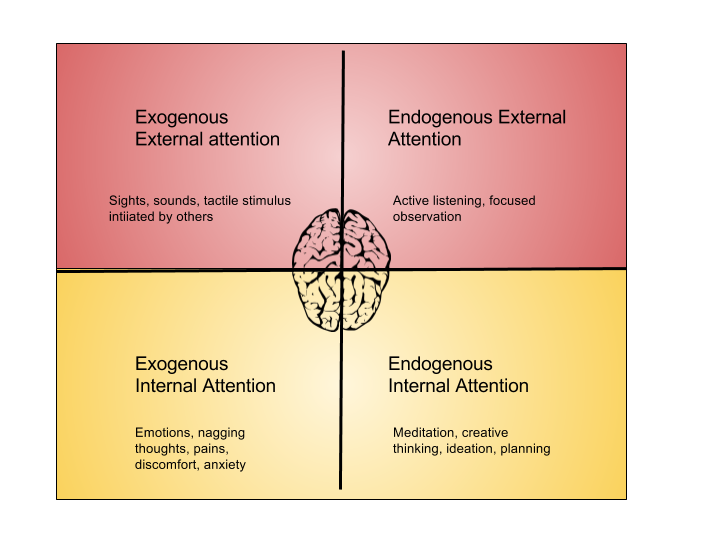
Most literature on attention identifies two modes of attention, identified by how an instance of attention originates. These two modes are known as exogenous and endogenous. There is also a way to identify attention based on whether the target of your attention is internal or external — meaning that you’re either focused on some subject inside your body or consciousness, or something outside of your body.

Exogenous attention is stimulus-driven. It’s the attention you pay to something that tugs at your brain. When you’re out walking in the woods and you hear a branch crack or see a rustling in the brush, you direct your attention there. That’s exogenous attention. It is inherently pulled along by things, rather than pushed by your will and intentions.

Endogenous attention (sometimes equated with executive control of cognition) is goal-directed, intentional attention. When you’re talking with someone and you focus on what they’re saying because you want to find out information, that’s endogenous attention. For the most part, that’s the type of attention we value in the context of work.

How to Harness the Right Kind of Attention

Both types of attention are vital. You need to be able to be pulled by stimuli (exogenous), as well as push yourself to focus on stimuli (endogenous). Developing exogenous attention will aid in being more alert, responsive, and ultimately, adaptable. However, developing endogenous attention will help you get better at the kind of deep focus that can help drive you to do your best work.

Referring to the diagram above, you should work to keep your attention on the right hand side of the vertical axis — that’s the endogenous section. When you do that, your attention is more active, goal-directed, and purpose-filled. The results will tend to be much better, in terms of modulation and vigilance.

The “Mode-Switch”

A useful strategy is what I call the mode-switch. If you find your attention being pulled by something (exogenous attention), stop and check if it aligns with your goal at that time (thus, tapping your endogenous attention). If so, then exercise that endogenous, goal-directed attention to select and modulate the information.

A helpful way to effectively switch modes is to identify where the stimulus is coming from. Is your attention being pulled by something external or internal? That is, are you being pulled by some outside force acting upon you, or something that your mind has raked up from the muddy depths of your consciousness?

Often times, we get distracted when our endogenous attention gets mode-switched involuntarily. This happens when the sources of stimulus get mixed.

Think of trying to read a book, when someone turns on the television. You were doing some endogenous, internal processing. Then the sounds and images on the TV begin to compete. Your power of selection weakens, and the ability to effectively modulate what you were focused on radically decreases.

The same thing happens in a different way when someone is talking to you and your mind begins to wander. You are engaged in endogenous attention, doing external processing, but something internal tugs at your brain and switches you to an internal, exogenous mode of attention.

Preparation and Pre-Processing

A common cause for failing to exercise good endogenous internal attention is a crowded mind. If you have a lot of thoughts popping up in your head and “stealing away” your attention, it can be intensely hard to focus. You’ll find yourself being switched back and forth from endogenous external attention to the person you’re taking with, to exogenous internal attention to your wandering monkey-mind.

But there is a way to ready your mind to stay in that mode of endogenous external attention, so you can reap the benefits of communication more effectively.

Paying focused attention begins with what you do in the hours before whatever it is you’re trying to focus on. You have to be able to clear your mind so that you can have a practically empty and still mind while your’e listening to someone, or focused on thinking through a problem. In order to do that, you must prevent feelings of anxiety about things not done, or random desires, impulses, or other distractions.

You have to process all of the things on your mind that are currently unprocessed. Doing that allows you to maximize your power of modulation when you are using your endogenous attention to focus on and process new information.

When you can clear your mind and you begin to pay real attention to something or someone, you feel it. It’s as if you can “point” your attention at someone as they talk — like a weapon. It almost feels like a superpower — and people really notice. They tend to react favorably. In turn, you appear more genuine, compassionate, patient. It is truly a win-win. You also learn a hell of a lot more.

Did you find value in this piece? Consider subscribing to my weekly newsletter — Woolgathering. It’s one email per week, with great ideas to add value to your life and work.

Your Three Brains and How to Use Them

The technologists continue to tell us that knowledge work will be threatened by algorithms and neural networks. We who do thinking for a living used to feel safe from the threat of automation replacing us. But computer programs are becoming smarter. How do we make sure we outpace their continued growth, and retain the value of our thinking?

Easy: we have three brains we can use!

I’ll bet you’ve been walking around thinking you’ve just got one brain to work with, haven’t you? Well, according to Dr Theo Compernolle, the author of Brain Chains, we actually have 3:

  • Reflexive Brain
    The reflexive brain only deals with what is present. It receives data in the form of experience, acts pretty much automatically to classify things as threats or not, and makes decisions accordingly.
  • Archiving Brain
    The archiving brain is that part of your brain that quickly filters, processes, and stores information for later use. It’s where the narrative of our life lives — from what we had for breakfast this morning, to what the capital of South Dakota is.
  • Reflective
    The reflective brain is the one that we use when we think about things that are not present. We engage it when we make plans for future, think about abstract concepts, or analyze and interpret past events. It is that brain that is most responsible for reasoning and decision-making.

Making the Most of Your Minds

So you have these three brains. They have separate functions, but you can derive great benefits from allowing them to do those functions to serve your purposes. Here are some tips to help you do just that.

Rest your Reflex Brain

Your reflex brain is active nearly all the time. You can’t help that. That’s why it’s called the reflex brain; it has been hard-wired through thousands of years of human existence to act automatically. For the most part, simply having enough sleep so that your reflex brain is not taxed by the barrage of sensory experiences around you should help you to get the most out of it.

Resting also allows the hormones that work in your reflex brain to rebalance, such that you’re not kept in fight-or-flight mode by excess cortisol pumping through your body. That kind of heightened state then steals power from your reflective and archival brains, which is most definitely not good.

Take Frequent Breaks

This is not the same as sleep or rest. Breaks are simply when you’re not engaged in conscious thought — the kind you mostly do with your reflective brain. Your reflective and archival brain share the same processing power (via your frontal lobe). So when you’re engaging in focused thinking and concentration, your archival brain is not getting its chance to do the work of connecting and processing what you’ve taken in.

We often refer to breaks as “down time” — a hold-over from the days of measuring output in manufacturing. But unlike workers on an assembly line, we are still doing valuable work when we’re taking a break. When we take a break our archival brain kicks into gear. It makes connections between things we’ve just taken in and solidified pieces of knowledge in our minds already. It’s the mental processing done here that is most responsible for creativity, innovation, and outside-of-the-box ideas. But it can’t happen without making time to rest from the focused concentration that happens in your reflective brain.

Do Prep Work — A Lot of It

The archival brain is one that takes inputs and does the work of connecting and processing. So you have to enable it to do that by doing prep work; the more, the better. There are a few things you can do to ensure this happens.

  • take notes
  • journal
  • review your calendar and task list from the past week
  • do skimming of reading material before focused reading

Your archival brain is all about making connections and processing stuff. So feed it the informational fuel and context it needs to do that effectively. Prep work is the way to do that. It’s not necessarily focused work — it’s more superficial, or review-like (preview-like, as well). It’s a way to do a bit of focused work, but to tap the archival brain a bit and get it primed to do its important work.

Separate Mercilessly

This concept is probably the most overlooked when it comes to really getting the most out of your three brains. You need to enforce separate time and space for each of them to work at their fullest potential. Much like a bodybuilder or athlete training different muscle groups while others rest, you need to exercise your brains in isolation regularly, to push them for the most benefit.

You simply cannot do focused reflective-brain work with the TV or radio going, and a bunch of visual stimuli buzzing about. You may think you have done it, but just wait until you’ve tucked yourself away in a quiet, secluded space for a period of time to do focused work. You will know and appreciate the difference. Do yourself the favor of taking the time to do it.

Also, when you take the breaks that your archiving mind needs, break of the shackles of focus. That’s right — I’m telling you to carve out physical space and time to not focus. The perfect avenue for that is menial tasks — chores, your commute, a run. So long as you don’t head out with the intention of thinking through something (where your reflective brain is engaged), your archival brain can freely roam and process. Remember, your archival brain shares power with the reflective brain, so be sure to really turn off focus and concentration to get the full benefit of your archival brain doing its important work.

Conclusion

You have 3 brains: the reflexive, the archiving, and reflective. They all do different work, and they all need separate time and space to do that work. Understanding the work they do, and respecting their need for separate time and space is key to being really good at learning and coming up with great ideas.

Did these tips help shed light on the elusive business of thinking effectively? Consider subscribing to my weekly newsletter — Woolgathering. It’s one email per week, with great ideas to add value to your life and work.

How to Supercharge Your Learning and Self-Improvement: The Golden Ratio of Communication

One of my favorite pieces of ancient wisdom comes from the Stoic philosopher Epictetus:

We have two ears and one mouth so that we can listen twice as much as we speak.

Sure, that may not be the real reason we have two ears and one mouth, but it reveals a useful pattern that we see repeated in communication in general.

Communication essentially has two parts: transmission and reception. These will manifest differently depending on the medium, but the general scheme is the same.

  • Textual Communication: writing and reading
  • Verbal Communication: speaking and listening
  • Pictorial communication: displaying and viewing

Simply Put, 2:1 Is Key

If we expand Epictetus’s aphorism into a suggestion for how to more effectively communicate, we get something like the following:

When it comes to communication, you should work hard to receive twice as much as you transmit.

In other words, you should listen twice as much as you speak, read twice as much as you write, and pay twice as much attention as you receive. Let me unpack that last one a bit actually, as it’s a bit complex.

When around others, we can either be looking to get attention, or we can be paying attention to those around us. The difference between the two is just like the difference between talking and listening — though it expands far beyond the realm of verbal communication. It’s about your attitude as a communicator — your purpose for communicating. And a 2:1 ratio helps to remind us that we should be communicating in a way that helps to enrich us, and to build relationships.

Why Aim for a 2:1 Ratio

There are 2 ways that a 2:1 receipt to transmission ratio will help you. The

  1. When you pay more attention than you attract, you enrich yourself much more.
    The more you listen, the more you learn. The more you read, the more you learn. The more you focus on others, rather than yourself, the more you understand them. Knowledge and understanding (not necessarily the same thing) provide the foundation for self-improvement. How ironic that they can be gained most effectively by paying more attention to others and the work of others than on yourself and your own work.
     
    What’s interesting is that even if you’re inclined to talk a lot and write a lot (as I am), this 2:1 ratio is of great benefit to you. The more you read, the better you write. The more you listen (real, active listening) the better you talk. Here “better” does not mean “more”, but rather, it means “of a higher quality”. So if you read a lot, you will tend to learn more things. You’ll have more ideas to connect with other ideas you’ve read about, and you’ll be exposed to more styles of writing. All of that gets stored in your mind, and can only help in your writing. The same mechanism is at work for speaking. If you engage in real active listening constantly, you can get clued into how to speak more effectively.
  2. When you pay more attention to others, you create better relationships.
    Your life is built on the foundation of your relationships. The better the relationships you have with others, the more fulfilling your life tends to be. There really is no better way to cultivate deep relationships with others — both personal and professional — than paying attention to others. Let them talk more, read what they write, when you’re together, make things about them, rather than you. If you’re really putting forth the effort, they will recognize it and appreciate it.
     
    The appreciation that others feel for your generosity will come back to help you down the road. People will be more likely to help you, more likely to give you the benefit of the doubt, and more likely to excuse when you make mistakes. All of these things are essential in achieving both personal and professional goals. It should go without saying that you need other people in order to really do well in your life — no matter what your goals. Simply put, a 2:1 communication ratio is one of the most effective ways to really hook in with other people in a deep and enriching way.

Quick Tips on Better 2:1 Communication

  • Ask more questions
    When you’re talking with others, try to ask more questions than making statements. Ask follow-ups. Try keeping that up for a while, and really absorb the answers you get.
  • Wait 3 beats after someone else speaks before you speak
    People are often willing to speak more than we let them. If given the chance, they will elaborate on what they’ve already said. For you, the receiver, this means gaining more information, and a better understanding.
  • Say slightly less than you feel the urge to
    Like I said in the previous bullet point, people are often willing to keep talking if given the chance. In order to be more receptive, fight that urge. Make simpler statements. If people would like clarification or explanation, let them ask —if they do that, they’ll be more interested in what you say anyway.
  • Make 3 observations about others right away, and make it a habit
    To help you more effectively pay attention to others, rather than trying to make yourself the center of interactions, make it a habit to be more observant of others. A great way to do this is to make 3 observations about others right when you begin to interact with them. Are they wearing their hair differently? Do they have new clothes? How’s their posture? What is their facial expression telling you? Is their tone of voice relaxed or tense? There are endless observations you can make — and they all help to better solidify your interactions in your own memory. That makes for effective learning and retention, so it also benefits you!

There are more tips, but these should get you started. Remember, communication is about giving and receiving. The more generous you are, the better that communication is — for you and for others.

Did you find value in this piece? Consider subscribing to my weekly newsletter — Woolgathering. It’s one email per week, with great ideas to add value to your life and work.

The Secret Sauce of Incredible Productivity

I’ve been working in the realm of productivity and personal development for years. I have been through numerous productivity systems, software, and methods. I’ve Gotten Things Done, I’ve Eaten the Frogs, I’ve amassed way more than 43 Folders. I’ve outlined, mind-mapped, Gantt charted, and Kanban carded myself silly.

And what do I have to show for all that? A new awareness for just how difficult it is to get a handle on all of the things you are doing, need to be doing, and want to get done.

The Lever of Productivity

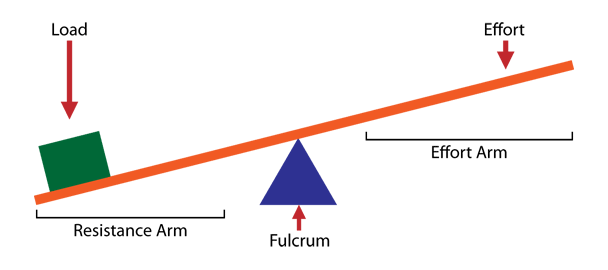
Being productive is insanely difficult. And what I have found is that no system, software, or morning routine will get you to get a better handle on it. Those things are tools — like a fulcrum in a simple lever. They will help you do more, but you need the proper force to be applied on your side.

When you try to get things done, you’re trying to lift what’s on the load arm. Whatever is there is what you need or want to get done. The software, systems, and organizers you use — they are mere fulcrums. They magnify the effort you put onto the load arm, but if that effort is not enough to move the resistance arm — you simply won’t get things done. You’ll feel bad, and you will lose momentum and fall flat on your face.

Two Ingredients

I believe that I have found the secret sauce of productivity — and it has 2 ingredients: caring and faith.

If you ever hope to make any productivity system work for you, you will have find a way to care about nearly everything in that system. You at least have to care that they get done. But you also have to care enough to want to check in on your list of things, and dedicate the time and effort to think about them.

You see, that is where nearly every iteration of every productivity system I tried has failed — I didn’t spend time and effort just looking at my projects and thinking about them. Why? Because I didn’t care enough. I didn’t feel enthusiastic about the things I was doing (or not doing).

That brings me to the second ingredient: faith. So many times, I didn’t care enough about the projects and tasks in any of my systems to keep giving them time and effort. But the reason for this is that I lacked faith in myself and my systems. I did not have faith that I could make the effort, think through things properly, and then do them effectively. But I should have.

More than anything, it was more a misplaced faith, then the lack of faith. Instead of cultivating faith in myself, I cultivated faith in others — their systems, their software, their theories. But never me — never my ability, never my strength or my intelligence.

For some reason, I expected that once I adopted the right system, read the right book, or bought the right notebook, I would simply begin to get better at getting things done. That, of course, did not happen. That’s where faith comes in.

Faith in this case is more like confidence in yourself and your abilities, no matter what kind of system you have in place. And I call it faith because it doesn’t require evidence. It doesn’t require you to have succeeded in the past, and it does not require that you have any particular reason to expect that you’ll expend the necessary effort to get things done. When you have that faith, mustering up the care is a whole lot easier.

At the end of the day, what moves the needle is what moves you.

Did you find value in this piece? Consider subscribing to my weekly newsletter — Woolgathering. It’s one email per week, with great ideas to add value to your life and work.

2 Big Obstacles to Clearer Thinking, and How to Overcome Them

One of my favorite parables is the story of the blind men and the elephant. It comes from the Indian subcontinent, and has been a part of basically all of the religions that came from that area. Here’s the basic gist of the story (forgive the androcentric nature of the story, as with nearly all old religious stories, it’s basically just dudes):

6 old blind wise men are told that there is an elephant on the outskirts of their village. None of them knew what an elephant was, and so they went over to see what they could find out by feeling the elephant.

Hey, the elephant is a pillar,” said the first man who touched his leg.
Oh, no! it is like a rope,” said the second man who touched the tail.
Oh, no! it is like a thick branch of a tree,” said the third man who touched the trunk of the elephant.
It is like a big hand fan” said the fourth man who touched the ear of the elephant.
It is like a huge wall,” said the fifth man who touched the belly of the elephant.
It is like a spear,” Said the sixth man who touched the tusk of the elephant.

They proceeded to argue with each other about what the elephant was like. Each man so sure of their characterization of it because they are so sure of how they perceived it.

In a way, they were all right, but they were also all wrong.

They were right in that their specific experience seemed to them like a rope, a tree, a fan, etc. But they were wrong in that they tried to take their experience and make a general conclusion about what the whole elephant was like. They overstepped the bounds of what they experienced.

The Two Components of the Problem

At work in this story are two problems that still have devastating effects in our ever-more communicative society. Lets examine them in turn.

The Duhem-Quine Thesis

You will often hear people say “the data tell us” — implying that the data do the work of telling us how things are. But that characterization skips a step. The data don’t tell us anything. The data are just pieces of information that we make into a story. We do this by analyzing it, and that analysis involves all sorts of preconceptions.

In the middle of the twentieth century, scientist Pierre Duhem and philosopher W.V.O Quine both criticized this way of seeing scientific evidence. Their thesis is complicated, but lying under it is the same problem we see with the men touching the elephant: they smuggle in their theories in with their perceptions. We do the same thing.

When we come into a situation and make what we think are just simple objective observations, we’re actually using our existing worldview to classify and label what we see, hear, and feel. So our characterization of observations are “theory-laden” — they are wrapped in the blankets of our worldview and our assumptions.

Realizing that this is the first step in becoming better at navigating disputes, debates, and disagreements. It will help you to ask better questions, and gather better information.

Dispersed Knowledge

Another component of this elephant story is something called dispersed knowledge. Originally written about by F.A. Hayek, the concept essentially says that no single person or entity has all of the relevant information to make a decision. Information is necessarily dispersed, pieces of it exist in different places, with different people.

For Hayek and his followers, this was the main reason why centrally planned economies failed. They did not have all of the necessary information to set prices, produce goods, and distribute in a way that kept an economy afloat. The hubris of assuming that all of the necessary information can be gathered in one place is just that — unfounded pride before the fall.

The men feeling the elephant are a classic illustration of dispersed knowledge. They each have vital information, but none has all of it. Rather than think of that as a possibility, they proceed as if they had the authority of full knowledge.

Ask yourself, how often are you acting without acknowledging the dispersal of knowledge? How often do you think that you — or your trusted sources have the full story?

What You Can Do to Be Less Blind

We do this all of the time. We fail to both:

  1. Resist the urge to take our limited perception and form a broader generalization from it.
  2. Give others the benefit of the doubt that they are at least partly right in their assessment.

We’re all blind, and we’re all feeling different parts of the elephant. All we have to do is open our minds to the possibility that others bring valuable experiences and ideas to the table — ones that can conflict with our ideas. If we can do that, we stand to learn so much more, and gain valuable relationships with others.

This is more than just a parable. It’s a framework for checking your own assumptions — to keep you from jumping from your experience to conclusions about how things are. Here’s how to overcome your blindness and gain better perspective — no matter what the issue:

I prepared the below worksheet to help get you thinking about things from 6 perspectives. Click the link below to access it:

https://drive.google.com/open?id=0B0Wt_3wbTW_3Rnh0azhBd05nOW8

Spend some time with it. Think about how you see things, and how others involved see things. See what you can come up with. How has your worldview or experience colored your observations? Have you thought about what knowledge you might not have? Answering these questions can be a huge help in getting you thinking about things from a wider perspective — and that can make all the difference.

Did you find value in this piece? Consider subscribing to my weekly newsletter — Woolgathering. It’s one email per week, with great ideas to add value to your life and work.

The Art and Science of Open-Mindedness

One of the keys to coming up with great ideas — the kind that drive change and make a difference — is being open-minded.

Being open-minded is about being receptive. It means being receptive to ideas that are odd, unfamiliar, possibly even repulsive. You welcome all, and push away none. It means being patient with oddball theories and bold claims when others don’t care to entertain them. Because of these traits, you are more creative, more innovative, and thus bring more value to whatever you do.

But you can’t just be open-minded, anymore than you can just be muscular. You can’t just wake up one day and say I’m going to be open-minded today! Rather you have to do something — a bunch of things — to open your mind. You need to develop mental habits that help overturn established ones. Opening the mind, and keeping it open, is an intensive and ongoing activity.

Below are a few pillars of the art and science of being open-minded.

Ditch the Backfire Reflex & Confirmation Bias

Too often, we reject unfamiliar ideas because we feel threatened by them. There’s a name for the feeling that underlies this; it’s called the backfire effect. It basically says that when you present information to someone that conflicts with a closely held belief, the result tends to be that rather than changing the belief due to information that conflicts with it, they more tightly cling to it — rejecting the information they just received.

If anything can be said to be the barrier to open-mindedness, it’s the backfire effect — or more accurately, its direct ancestor: confirmation bias. We tend to seek information that confirms our beliefs. We tend to either actively turn away or just ignore information that challenges our beliefs. As a result, we tend to keep the same set of beliefs, generate the same types of ideas, and we become less innovative in our thinking.

One way to do this is to adopt a falsification mindset. Basically, this involves taking the attitude that you are attempting to find evidence that conflicts with your strongly held beliefs. If you find it, what a great mind-opening experience! If you don’t, you get the benefit of having honestly strengthened your position. Either way, you have taken a real look at many more diverse ideas that you otherwise would have.

Develop a Healthy Relationship Between Your Identity and Your Beliefs

There’s a clear danger when who you are comes from what you believe. This is part of why politics is so contentious and divisive — people’s beliefs about the topic are tied closely to their core conceptions of who they are as people. The same holds true for spirituality.

But this happens in areas other than the political and religious. We tend to focus only on certain areas of scholarly interest. We limit ourselves because we consider only our immediate interests as worth pursuing. Doing that pigeon-holes your intellectual and creative development.

You are not your beliefs. You are also not your interests or expertise. When you think in that way, you leave yourself open to so many new and useful ideas.

Abandon the Lust for Expertise

Expertise is great, but there are severe drawbacks to it. When you regard yourself as an expert at something, you tend to have a large body of knowledge that you take for granted. You tend to ask fewer questions, because your working assumption is that you know quite a bit. When you ask fewer questions, you leave little room for new and creative ideas.

So while it is tempting to want to gain expertise in something, and while it feels great to have a great deal of knowledge, it places a cap on where else you can go in the realm of ideas. Abandon the lust for expertise, and find open the realm of innovation and creativity.

Question the received wisdom. Ask yourself why the things you take for granted are so very obvious to you (are they?). Even if you find that you can’t shake your belief in them (which is fine), the very act of re-examining them will be enlightening.

Did you find value in this piece? Consider subscribing to my weekly newsletter — Woolgathering. It’s one email per week, with great ideas to add value to your life and work.

What Does “Think Outside of the Box” Mean?

credit: Matt Palmer

And, How Do You Go About Doing It?

Among the most well-worn phrases in the business world is “thinking outside the box”. It is supposed to mean thinking creatively, freely, and off the beaten path. It’s the kind of thinking that — in an age of increasingly powerful algorithms and neural networks — garners significant attention. For now, it’s the kind of stuff that machines can’t do that well.

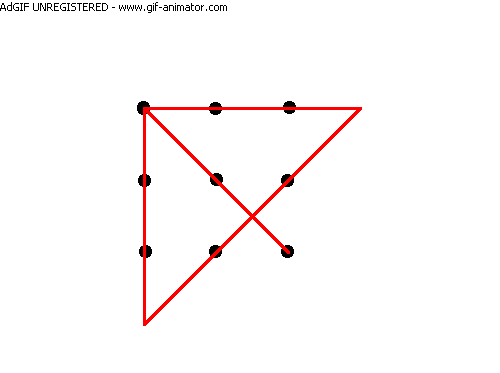
One supposed story of the term’s origin is actually a great illustration (literally) of what this kind of thinking is, and why it’s so sought-after. As the story goes, management consulting groups in the 1960s and 70s began using a particular puzzle called the “nine dots puzzle” from a 1914 book by Sam Lloyd called the Cyclopedia of Puzzles. They would present the diagram below, with the following instructions:

Link all 9 dots using four straight lines or fewer, without lifting the pen and without tracing the same line more than once.

The most oft-cited solution appears below. It uses only 4 lines.

See where “outside the box” comes from? There was no directive given about staying within a box, but our minds tend to build a box there, and a constraint is instantly put in place.

Thinking outside the box is about dispensing with constraints — as many as possible. That’s what the solution above does, and that’s what the most effective kind of original and innovative thinking also does.

Below are 3 strategies that can help you think “outside the box”— in the way that the origin of the term suggests.

1. Eliminate the Goal-Directedness of Your Thinking

If you aim at the same target everyone else is aiming at, your shots will end up where everyone else’s do. If you till the same soil that everyone else tills, plant the same seeds they plant, and use the same water, you’ll get the same garden.

My point is that the minute you introduce a goal in your thinking, you’re introducing a constraint. Your mind now has a direction, and it will tend to go in that direction. This is why so many businesses bring in outside consultants to help come up with new ideas. The consultants don’t carry the burden of constraints on their thinking. They can dream up and offer up wildly new ideas that get people excited, and lead to innovative pivots and launches.

This has become a hot topic in child psychology. A 2014 study at the University of Colorado studied the effect that free play and structured play has on children’s executive function — the ability to independently set and work toward goals. The findings:

The results showed that the more time children spent in less structured activities, the better their self-directed executive function. Conversely, the more time children spent in more structured activities the poorer their self-directed executive function.

You’re not a child, of course, but think about how structured thinking — as opposed to unstructured thinking — can have a similar affect on what crazy new ideas you’re able to come up with.

2. Intend to encounter, rather than “come up with” ideas

Rather than “coming up with ideas” — which is more an act of creation, it’s better to think of yourself as just encountering ideas. You’re not creating, you’re just browsing. That’s a real difference in attitude. You’d be surprised at the difference this can make. It takes a weight off your shoulders to not have to make something, but rather to just stumble upon it.

Think of it as walking through an open-air flea market, looking at whatever trinkets you happen to see. You can move with ease — not particularly moved by any of them until something really stands out. But if there are items in that same flea-market that you hand-crafted and brought there, you will naturally pay more attention to them.

Also, if you find that you’ve got an idea that’s pretty stupid, if you don’t view yourself as having created it, you’re less likely to be emotionally and cognitively impacted by a negative assessment of it. You can keep on churning out ideas.

3. Think wide

Keep every realm of thinking on the table. Geography, religion, finance, cubist painting, archaeology. Don’t discount anything as unrelated or unconnected. It is often that kind of thinking that creates the kind of problems that demand “outside of the box” thinking in the first place.

One of my favorite stories in this spirit is about Allan Lichtman. He’s the guy who has become notorious for establishing a system that predicted Donald Trump’s unlikely election as president in 2016— when even seasoned political scientists and statisticians couldn’t. It also predicted every presidential election result since the system was published in his book in 1981.

Endgadget ran a great piece about how he did it:

“Lichtman’s prediction system is founded on geophysics, using the fundamental ideas of earthquake science to predict social and political disruption. He created the Keys to the White House system with Vladimir Keilis-Borok, founder of the International Institute of Earthquake Prediction Theory and Mathematical Geophysics, in 1981. Essentially, Lichtman and Keilis-Borok changed their thinking about elections. They applied geophysical terms to the process, getting rid of ideas like Democrat, Republican, liberal and conservative. Instead, they reinterpreted the system in terms of stability and upheaval.”

Did you catch that? Lichtman’s collaborator on a prediction system for political elections was a geologist studying earthquakes.

The lesson here? Stay wide in your thinking. Don’t discount things that seem unconnected. The benefits to your thinking can be tremendous.

Did you find value in this piece? Consider subscribing to my weekly newsletter — Woolgathering. It’s one email per week, with great ideas to add value to your life and work.

The Productive Power of the Wandering Mind

Why Focus and Mindfulness are Only Half of the Formula for Productivity

Over the past few years, there has been an intense emphasis on both focusing and mindfulness in productivity writing. And certainly both of those things are important.

But what if I told you that focus and mindfulness are only half of the story when it comes to doing really good knowledge work?

What if I encouraged you to step away from your defined work for one hour and let your mind wander? And what if told you that in doing that, you could drastically improve the quality of your ideas, the quality of your work, and your productivity?

You might call me crazy. And you would not be the first. But bear with me.

We’re Thinking of Work in the Wrong Way

Modern work places a heavy psychological load upon us. An ever-increasing portion of jobs require largely cognitive tasks than physical ones — especially in developed and developing countries. But our idea of what work looks like has not caught up with that change.

By and large, we still view work through the lens of manufacturing, where you have to be moving or straining in order to be doing real work. But for most of us, that is just plain wrong.

Real work involves thinking, coming up with ideas, connecting concepts, developing strategy, thinking through alternative plans. None of that work involves physical movement. It is mental work, and it requires a different approach.

The Brain’s Two Networks

The mind has two modes of working, referred to as networks. They are defined as:

  • Task-positive Network
    The network in your brain that is engaged when you are doing a specific piece of focused work. As I write this piece, it’s my Task-positive Network that’s lit up.
  • Default Mode Network (aka “task-negative Network)
    The network engaged when you unfocus from specific work — when you let your mind wander. Think of it as the network that runs your mind when you’re in the shower, kind of decompressing — “the shower mind” if you will.

The conventional wisdom seems to be this: the real value is created when people engage their Task-positive Networks — when they focus and concentrate. We shape our goals around that way of thinking. But by thinking this way, we have severely devalued letting our minds wander as part of our work. We allow it to happen, but it’s seen as a “break” — not part of the mental work that helps us produce great ideas and boost our productivity.

But nothing could be further from the truth.

Contrary to our popular notions, when we’re decidedly unfocused, there’s a lot of valuable stuff going on:

When you unfocus, you engage a brain circuit called the “default mode network.”…
[The DMN] is doing anything but resting. Under the brain’s conscious radar, it activates old memories, goes back and forth between the past, present, and future, and recombines different ideas. Using this new and previously inaccessible data, you develop enhanced self-awareness and a sense of personal relevance. And you can imagine creative solutions or predict the future, thereby leading to better decision-making too. The DMN also helps you tune into other people’s thinking, thereby improving team understanding and cohesion.

The fact is, for all of the current enthusiasm for mindfulness, little is being written on behalf of the wandering mind. But letting your mind wander regularly is actually a great habit to get into. It fosters creativity, innovation, and strategy. It brings real value by refreshing and altering your thinking.

Use Your Brain’s Other Network

I’ve written before about the virtues of thinking differently, but I’m not the first to do so.

In order to bring more value in the work you do, you need to think differently. In order to to think differently, you need to think differently about the process of thinking.

The process of thinking is not just focused effort on one topic, and it’s not just “being in the moment”. It also involves mind-wandering, daydreaming, and letting go of control of your mind for periods of time. Doing that engages the Default Mode Network in your brain. That allows you to do the kind of higher-level, outside-of-the-box thinking that produce real value in the long-term.

So my challenge to you this week is this: set aside an hour, or 3o minutes. Put away the computers, phones, pens and paper. Allow your mind to just wander. Don’t force it to focus, don’t wrangle it in. See where it goes, allow yourself to get excited or affected by what comes to mind. When you’re done — if something sticks with you — record it. If not, no worries. You’ve still done some work — you engaged that network, and primed it for further activity.

Do this as regularly as you can. I promise you, after some period of practice, you will notice a change in your ability to think of and develop ideas. It’s as close to a sure thing as I’ve ever found in knowledge work.

Did you find value in this piece? Consider subscribing to my weekly newsletter — Woolgathering. It’s one email per week, with great ideas to add value to your life and work.

Think Like No One Else

Working and Thinking at a Higher Level, No Matter What Your Work Is

There’s a phrase that I have heard a lot in discussions about money management:

“If you will live like no one else, later you can live like no one else.”

It is attributed to well-known financial writer, speaker, and radio host Dave Ramsey. The gist of the quote is that in order to have the kind of bountiful and secure lifestyle that very few have, you have to be willing to take steps that few others take, in order to make sure it comes to fruition.

It’s not an analysis of the only way to become fabulously independently wealthy — there are those who strike it rich without having to learn hardcore money management. But it is a simple piece of advice that is not unique to the world of finances — it’s advice that extends to many arenas where you might be trying to make progress. In order to progress further than most others, you have to be willing to do things in a way that most others are not.

In my experience, the following maxim has served me well:

If you are willing to think like no one else, later you can think like no one else.

Why thinking? Because thinking is the most important skill you can have. Being able to think of things that no one else thinks of, anticipate things that others don’t, and gain perspectives that few have — those aspects of skillful thinking translate to nearly any job you might want.

So how do you do it? How do you think better than everyone else? Well, it involves thinking like no one else — if you’ll pardon my repetition. You have to be willing to do the kind of cognitive work that very few others are willing to do.

  • Be willing to always be looking for new ideas.
    During your working hours, stay in a mode of curiosity. Stay hungry for new ideas to get into. Record them for later research. Make the list of ideas to learn about a focal point of your daily/weekly/monthly ritual.
  • Do the work to figure out what you don’t know.
    The best way to learn is to admit what you don’t know. But a lot of people assume they know things that they really don’t. It actually takes some work to figure out what you don’t know. The best way to do this is to ask yourself how you would explain it to a group of elementary school children. If you find it impossible to do, you don’t know the subject well enough. So get to work learning more about it!
  • Study and appreciate ideas for their own sake, not for what you think you can do with them.
    Plenty of people pay lip service to ideas these days. Plenty of people are looking to learn about things because their job necessitates it, or because they already know what they’re going to do with the knowledge. But if you really want to have the kind of ideas that others don’t, you need to pursue new ideas for their own sake — not because there’s already a use for them. If you want to make a totally new dish, you can’t use a recipe that already exists.
  • Be willing to entertain opinions and ideas that others dismiss as silly, wrong, or idiotic.
    One person’s trash is another person’s treasure. There are ideas that others toss away because they don’t want to work with them. Nearly every silly idea can be useful in one of two ways: either understanding the underlying principle of it, or understanding what other ideas might be connected to it. There is fertile ground in disassembling and re-assembling ideas to cultivate new ways of thinking.
  • Be willing to write — a lot — about your thoughts, feelings, and random things floating in your mind.
    One of the most effective ways to clarify and cultivate thoughts is to write. Just sit and write. Mind-map, free-write, journal, outline, etc. Just get all the ideas out on paper, and push yourself to see if more are hanging around in the background of your mind. Come back to them later to see if anything jumps out at you.
  • Be willing to do the work of making connections between things that seem unconnected.
    True intelligence and creativity come from being able to connect things that others haven’t thought to connect. And the great thing is that connections are there between pretty much any two ideas. It’s just that some of those connections are interesting and useful, while some are not. 
     
    A great exercise to do is to take a piece of paper laid out in landscape orientation. On each side of the paper, write an idea or concept that seems completely unrelated to the other, and then try to write down things to connect them to each other.
  • Be willing to ask a lot of questions — even to the point of annoying people.
    There are few better ways to stumble upon more ideas and gain more insight than by asking questions. Some people are receptive to this, some people aren’t. You obviously don’t want to seem as if you just don’t care about others’ time or about making progress at all, but you do want to push others to address your questions, and push yourself to find out as much information as you can.
  • Be willing to be slow to action.
    These days, people demand quick action. People want to be quick to market, early adopters, beta testers, etc. That’s fine, but that’s where you will have to be willing to really act like no one else. You have to resist the trend to act quickly, especially when it seems like the action is merely reactive, as opposed to coming from a place of new and interesting ideas. I’m not saying there’s no virtue in quick action, it’s just that enough people are acting quickly — you don’t need to be another one, especially when you could be cultivating a better way of thinking.
  • Be willing to set aside time for just thinking — sitting or walking and thinking.
    When George Shultz was Secretary of State in the US during the 1980s, he had a habit of regularly taking time to just think. As David Leonhardt writes:

Shultz, who’s now 96, told me that his hour of solitude was the only way he could find time to think about the strategic aspects of his job. Otherwise, he would be constantly pulled into moment-to-moment tactical issues, never able to focus on larger questions of the national interest. And the only way to do great work, in any field, is to find time to consider the larger questions.

A mentor of mine is always telling me that I need to be out of the office for several hours each week “just to step back and think”. It’s something he does regularly, and as successful as he is, it seems to be wildly beneficial.

There are likely more aspects to thinking like no one else, but this gives you the basic outline. It’s difficult work, but after a while, it becomes very rewarding.

Did you find value in this piece? Consider subscribing to my weekly newsletter — Woolgathering. It’s one email per week, with great ideas to add value to your life and work.

The Movement Method: How to Leverage Your Short Attention Span and Little Time to Learn More…

Reading books is in vogue once again. Articles abound about the reading lists and reading habits of this or that entrepreneur or self-help guru, scientist, world leader, or online personality. But not all of us have the time and/or attention to plow through as many books as the many internet authors and entrepreneurs we read about.

For me, a person with a naturally short attention span, little available time, and an insatiably curious mind, this has stirred up a lot of feelings of inadequacy. I can barely finish the book I took out from the library 3 weeks ago, let alone sit and consume 10 books this month to keep up with whoever the trending thought leader on Flipboard is this week.

So for those of us with limited time, and limited attention, the name of the game is to saturate the limited time with as much attention as possible. What I have found most effective in doing this is enthusiasm. Namely, keep that enthusiasm and excitement of delving into a new subject as high as possible for as long as possible.

For me, the key to this is movement. Keep moving from one source to another, from one area of a subject to another, etc. Move around and gather what is useful, stockpile it, and venture out again.

That method is all about 3 things:

  • capturing interests
  • short bursts of targeted research
  • A key principle I call “Vocab Munching”

Capture, Capture, Capture!

For those of us who don’t get long blocks of time or attention to just sit and read books, the name of the game is all about leveraging the intensity of our curiosity. That means that when something piques our interest, we need to capture it for later use, and build up a store of things we’re interested in really looking into.

This means to simply record every idea or notion that piques your interest, as it happens.

There is no better quote about this than from Mr. GTD himself, David Allen:

Most people have (or could have) many more of these kinds of thoughts than they realize, during the course of any 24-hour period. Most people don’t get value from many of them, because they lack both the habit and the tools to collect those thoughts when they occur. If they aren’t captured, they are useless, and even worse can add to the gnawing sense of anxiety most people feel about things…

Keep a list that’s easily accessible, and use it to springboard your explorations into learning about stuff. Cross off anything you’re no longer enthused about.

The name of the game is your enthusiasm; if you’re not eager to find out about something, you’re less likely to use your limited free time to do focused and interesting learning about it. So keep your list loaded with only things that excite you when you see them on the list.

Read and research in short bursts

I’m not going to pretend like my attention-span problem doesn’t have anything to do with how much information is out there literally at my fingertips. Nearly every time I’m reading a book, I stumble across something that isn’t further explained in the book, but my overexcited mind wants to know more about now!

Sure, it probably helps to better control and suppress that urge, so you can finish reading books without interrupting yourself. But at the same time, while you’re succumbing to that urge, allow it to create value for you, and when you find yourself doing a very quick deep-dive on something you came across in a book, record what you find!

Use Instapaper, Evernote, or your preferred capture tool for internet content, and save things you skip around to during a so-called “interruption”. At worst, you have saved yourself some content that will be useful later. At best, you’ve started a new research bundle that may fuel later endeavors!

Be a Vocab Muncher

This is the most important piece in leveraging a short attention span and limited time to more effectively learn.

Back when I was in grammar school, on our schools one (singular) Apple II computer, we had a game called Number Munchers.

It was sort of like a Pac-Man game, but the object was to “munch” certain numbers that met predetermined criteria, and “munch” as many of them as you could. My suggestion for you, dear reader, is to learn in short bursts by becoming a vocab muncher.

Get into a new subject matter quickly, and keep enthusiasm at a high level by learning as many new pieces of previously unknown vocabulary in that subject as you can.

As passé as it may sound, Wikipedia is usually a great place to start. It provides overviews of subjects with terminology you can use to fuel your subject matter exploration. It also provides links to primary sources where you can do deep dives, or look at surveys of particular subjects.

  • Start at the Wikipedia page for some subject you’re interested in.
  • Look for any hyperlinked words (usually in the top paragraphs of the entry) that you don’t know, and that seem like terms of art for that subject matter.
  • Click on those hyperlinked terms and get a sense for what they mean, and how they’re involved in the essence of the subject you’re learning about.
  • Record your brief one-sentence understanding of the vocab word under the heading of the subject you’re learning about
  • Repeat as many times as you can until your available time or attention expires

This exercise does two things: (1) it keeps the momentum and enthusiasm high (2) it provides a great basis for future learning about a subject. You get to feel like you’ve learned some things rather quickly about a subject, and you get to better understand what might be left for you to learn. It makes it easier to pick that subject back up later, and learn more about it.

In Conclusion

Remember, the name of the game here is keeping enthusiasm high, in order to saturate limited time with as much attention as possible. The best way that I have found to do that is to capture all the ideas that pique my interest and learn about them by “vocab munching”.

I hope it works for you.

Did you find value in this piece? Consider subscribing to my weekly newsletter — Woolgathering. It’s one email per week, with great ideas to add value to your life and work.

The Problem With Going Viral

Spend 5 minutes reading things on social media, and you’re bound to come across an article like this:

https://medium.com/the-mission/10-strategies-to-go-viral-on-any-platform-e3eeaccd5379

I embedded this piece here because Todd is a good writer, seems sincere, and isn’t trying to pull one over on anybody. He’s trying to help people to achieve a goal that many online writers have: to go viral.

Part of me wants to go viral.

Part of me wants to write a post that gets shared hundreds of thousands of times, pops up on all sorts of media outlets, and garners some sort of internet fame (whatever that means these days).

But I suspect that the same part of me that aches to “go viral” is the same part of me that wants to drink 5 glasses of bourbon and eat an entire pizza the night before a big presentation in front of a client — and still nail it.

It’s the same part of me that used to spend more time hunting for the magic muscle-building supplement than I spend doing squats and cooking healthy meals.

It’s the same part of me that used to spend more time looking for the best notebook, coolest pen, and best productivity app than I did actually thinking about, organizing, and working on my projects.

That part of me is lustful, careless, and has no regard for the long-term. 
That part of me wants to cut the corners that countless others couldn’t cut.
It wants more results, with less effort. It is impatient, immature, and impulsive. 
I probably shouldn’t let it dictate what I publish.

Here’s the thing about going viral. Try as you might, you can’t reap the benefits of that term — “viral” — without also having to deal with the drawbacks. Viruses spread quickly and easily, and to a lot of people. But they also end up in many places where they’re not wanted, and where they can end up being toxic. But your post about the 10 things you learned from quitting your job can’t be toxic, right? Kind of; just think about it.

The drawback with going viral is that it can serve to pigeon-hole you. So your post about the killer morning routines of billionaires went viral ? Great! What next? Now you’ve got to keep writing about killer morning routines of billionaires, or you can pretty much count on your next piece falling mostly into obscurity.

So would I love it if my posts went viral? Sure — it’d be exhilarating. Would I love the feeling after about a week or so — when the deluge of notifications had mostly subsided? No. I’d feel like I did something wrong. But I didn’t. And I shouldn’t feel that way.

I think what we don’t realize is that we’ve got our assessment of virality all messed up. We fail to realize that so much of what makes a given piece go viral is much like what makes a kite fly. The conditions have as much to do with success as any kind of skill. Writers forget that at their own peril.

Did you find value in this piece? Consider subscribing to my weekly newsletter — Woolgathering. It’s one email per week, with links to meticulously curated interesting ideas, and links to my own ideas, too.

The Pursuit of Happiness v2.0

Morning routines are the on trend these days. It seems like each wealthy and/or famous person has a morning routine that has been a contributing factor in their success.

Nearly every morning routine you can read about includes meditation. What it also includes is a bunch of stuff geared at making you happier. But what’s odd is that while they include both meditation, and a stated aim of making you happier, those dots are rarely connected.

For the vast majority of us, happiness is not something that needs to be pursued. In fact, pursuing happiness is as odd a concept as pursuing one’s nose. It’s right there in front of you, a part of you, if you just realize it’s there. Often, just meditating alone can help you to realize that.

What gets in the way, for most of us, is desire. We desire certain things. We desire material objects, we desire other people, we desire physical sensations.

We also desire situations. We desire having a certain job, having the admiration of various other people. We desire notoriety, expertise, and other peoples’ acknowledgment of those things in us.

But here’s the crazy thing, we desire both those things, and those situations, but in both cases, they are things that we don’t have. When we do get some of them, our focus then changes to those things that we don’t have. And when we achieve more, we tend to then want more. We replace previous hurdles to happiness with new ones.

All that does is create space between happiness and us.

This is not abnormal, it is something that so many of us do. But the process of stopping it is fairly simple. Just think of your nose. Like your nose, happiness is there waiting for you. Just realize it. You are here, you are alive, conscious, and able to feel. So choose to feel that the present moment is enough for now.

Choose to acknowledge that you are inclined to make your happiness contingent upon some future outcome, but then break that connection. Sure, it would be great if you got that book deal, or made a six figure income next year, but why hold out on being happy until those things happen? Why not just take the time to appreciate where you are, be happy now, and then also be happy when you achieve your goals? It is possible, I promise.

Over 200 years ago, when the notion of “the pursuit of happiness” was first coined as a cultural motto, we as humans lived a more closed-off existence. Today, we have access to more ideas, more opportunities to be enlightened and learn how to live better. Let’s not let that opportunity escape us. Just remember your nose.

All of this is to say the following. These days, I’m no longer pursuing happiness, I’m pursuing other things, with happiness as my beneficent companion. Never too far away to call upon.

Did you find value in this piece? Consider subscribing to my weekly newsletter — Woolgathering. It’s one email per week, with interesting stuff to ponder, from me and from around the web.